
He failed the first time he tried rescuing a child. Yet, Nobel Peace Prize laureate Kailash Satyarthi said he was determined to keep trying. He was beaten up several times during many of his rescue missions, but his mission was bigger than him and he marched forward.
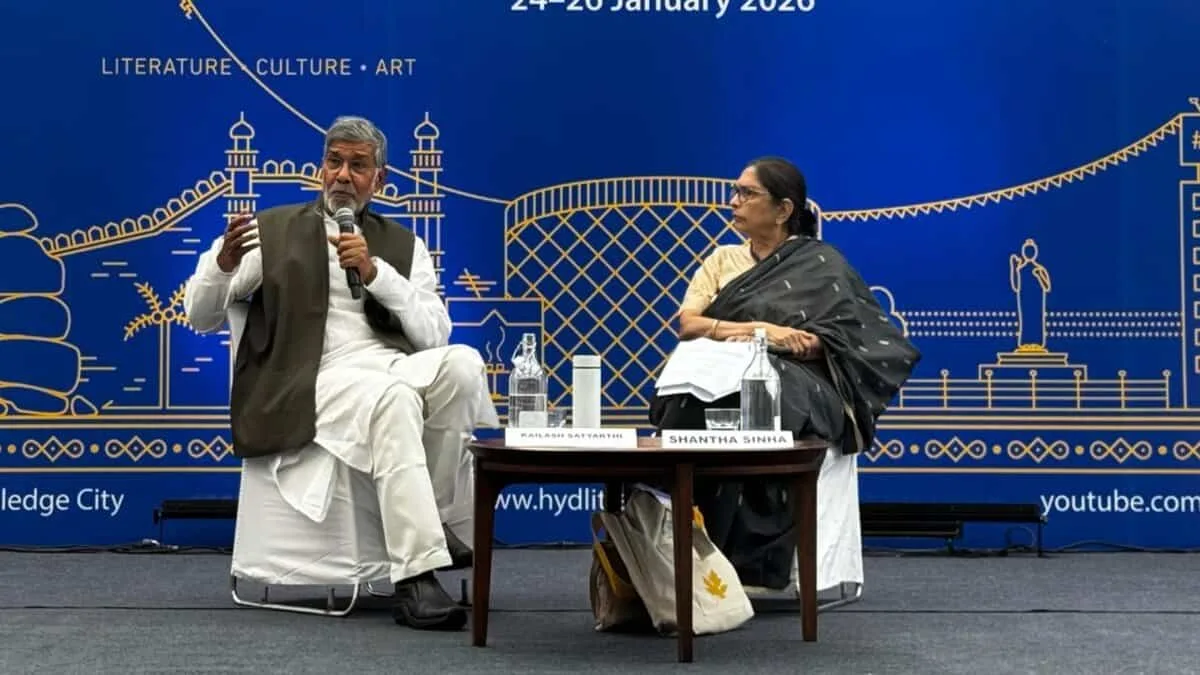
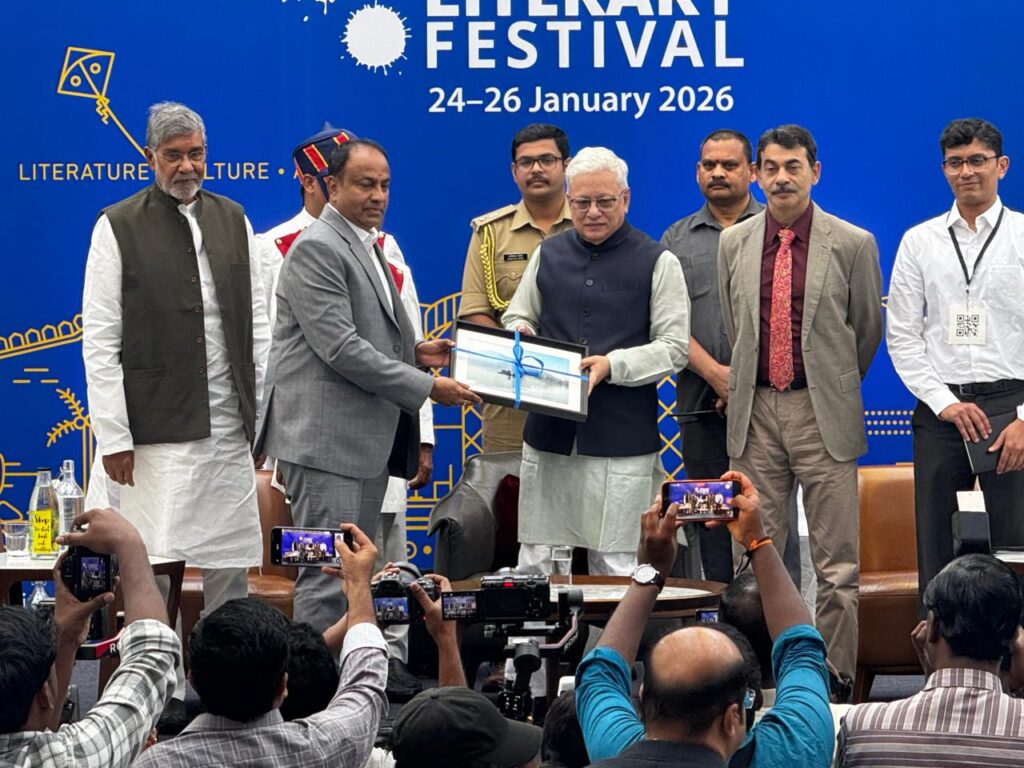
These are some of the anecdotes we learnt about Satyarthi when he launched his book “Karuna: The Power of Compassion” at the plenary session of the 15th Hyderabad Literary Festival on Saturday, January 24, where he also spoke about what compassion means to him.
“Compassion, for me, is when you feel other people’s problems, feel their pain and you try to solve it, forcing you to take action,” he said. “Unlike emotional quotient or intelligence quotient, compassion quotient (CQ) is unlimited. Compassion is innate,” the social reformer said.
Satyarthi said humans are amazing creatures who are born with power. “We have the capacity to find solutions.” This is why he wrote the book: “to spark compassion in people and a willingness to make a change.”
The ‘lost’ Nobel speech
Describing how he had lost the speech he prepared when receiving the Nobel in Norway, which apparently made King Harald and Queen Sonja “nervous,” the activist said he decided to tell a story that encapsulates his work.
“There was a fire that broke out in a forest and all the animals, including the lion, the king of the jungle, ran out. On his way, the lion saw a hummingbird carrying water in its beak. The lion asked, ‘Why are you not running away too?’ The hummingbird said it is trying to extinguish the fire. When the lion asked again, ‘What difference will your small beak make?’ the bird said, ‘I am doing my bit.’”
This, Satyarthi said, “is the story of me.”
“Whenever you feel the desire to take action and make a change, you are being the hummingbird. I am here to awaken the hummingbird in all of you,” he said to a captivated audience at the Sattva Knowledge City in Hitec City.
What made Satyarthi do what he does
In 1981, when the Nobel laureate was about 27 years old, a man named Wasel Khan, a bonded labourer in a brick kiln in Punjab, came to Satyarthi’s home in Delhi begging him to write in his magazine named “Sangharsh Jaari Rahega (The struggle will continue)” about how in his employer was trying to sell his daughter, Sabo, to traffickers for prostitution.
According to Satyarthi, the traffickers were offering Khan money to sell his daughter, after they were driven away from their home in Aligarh, Uttar Pradesh, in search of a livelihood.
“I told Wasel that I will write about this after I rescue his daughter,” he recalled.
The first time he tried rescuing her, along with some of his friends, he was beaten up and unable free anyone. “I came back empty-handed but determined to carry forward,” he said. The social worker came back to Delhi and filed a petition in the High Court.
“In a few days, I rescued 36 children and women from being trafficked. The children were jumping around in joy; the mothers hugged their children. I felt like I freed myself too,” he said.
This incident, he said, gave him a clear purpose.
“This was the force of compassion, not sympathy or empathy,” Satyarthi said, adding that he wants people to feel the same through his book.