
Hyderabad: The Telangana Pradesh Congress Committee (TPCC) has urged election authorities to ensure that the proposed Special Intensive Revision (SIR) of electoral rolls in Telangana does not become a “backdoor NRC exercise,” while demanding safeguards to protect minorities, migrant workers, Scheduled Castes, Scheduled Tribes, and economically vulnerable voters from wrongful exclusion.
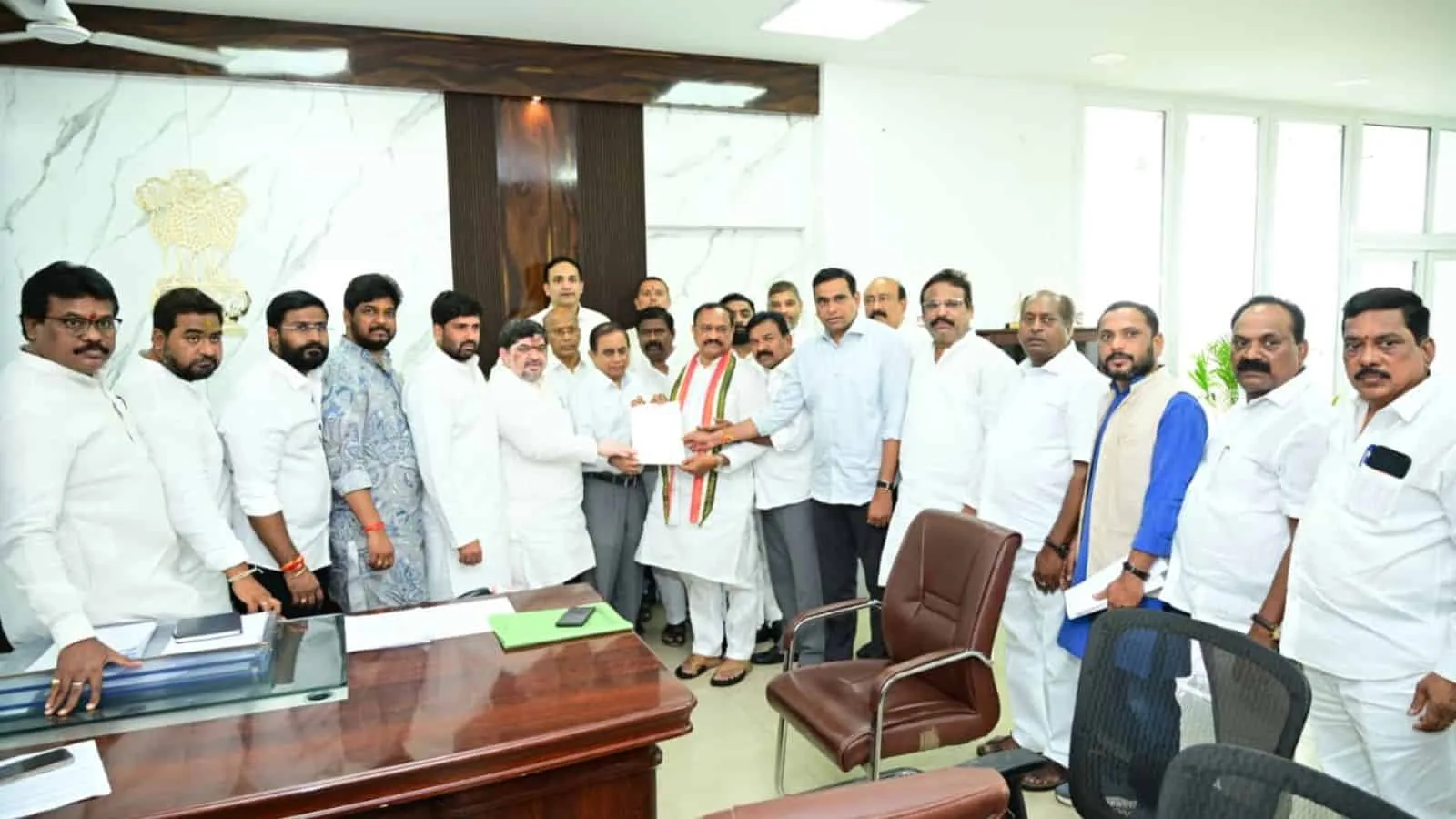
In a detailed memorandum submitted to Chief Electoral Officer C Sudharshan Reddy, TPCC president and MLC B Mahesh Kumar Goud called for the voter verification exercise to be conducted in a “fair, transparent, and impartial manner” and cautioned against hurried implementation ahead of future elections.
The Congress party argued that experiences from several states had shown that rushed electoral roll revisions often led to confusion, anxiety, and distrust among voters. It said Telangana should instead adopt a phased and carefully monitored process with adequate safeguards.
Vulnerable communities
A major focus of the memorandum was the protection of vulnerable communities during the revision exercise. The TPCC stated that Scheduled Castes, Scheduled Tribes, minorities, migrant workers, seasonal labourers, and economically weaker sections should not be disproportionately affected during voter verification or deletion drives.
The party proposed special awareness programmes, targeted training sessions, and the appointment of Booth Level Officers (BLOs) from vulnerable communities wherever feasible to improve confidence in the process.
The memorandum also sought a relaxation mechanism for people who migrated to Telangana after 2002 and whose names may not appear in older electoral rolls.
The Congress suggested that affidavits should be accepted as sufficient proof for inclusion if such persons had participated in at least two local elections.
Citizenship concerns
The TPCC further asserted that the SIR process should not directly or indirectly evolve into a citizenship verification exercise linked to the National Register of Citizens (NRC).
Citing Supreme Court observations, the party maintained that the Election Commission could not demand proof of citizenship during voter registration and urged authorities to ensure that the exercise remained confined to lawful voter registration procedures.
The Congress also demanded stronger safeguards against wrongful deletion of voters. It recommended mandatory written notice before deleting any name from the rolls, a minimum one-month response period before final action, and compulsory physical verification in cases involving software-generated discrepancies such as duplicate photographs or spelling variations.
Transparency measures
The memorandum expressed concern over alleged misuse of Form 7 deletion requests in several states and insisted that no voter should be removed without credible evidence and proper field verification.
Calling for greater transparency, the TPCC sought the supply of electoral rolls from 2002 and 2025 to recognised political parties in machine-readable formats such as OCR, CSV, or Excel files. It also asked authorities to promptly share lists of voters marked as Absent, Shifted, or Dead (ASD) and proposed deletion lists with political parties and Booth Level Agents.
The Congress party suggested that all records related to the SIR process should be preserved for at least five years at the offices of Electoral Registration Officers (EROs) and District Election Officers (DEOs).
Administrative burden
The memorandum also highlighted concerns over the workload on election officials. The TPCC argued that the SIR process should not be rushed within two or three months and instead be spread over 1.5 to 2 years, noting that voter numbers had risen sharply since the last intensive revision exercise conducted in undivided Andhra Pradesh in 2002.
The party opposed assigning both Census and SIR responsibilities to the same officials, warning that dual responsibilities could overburden staff and affect the quality of verification.
The Congress further raised concerns over alleged irregularities in ongoing pre-SIR activities. According to the memorandum, some BLOs were conducting voter mapping exercises from fixed locations alongside political party leaders instead of carrying out mandatory door-to-door verification.
Alleged irregularities
The TPCC alleged that some voters were mapped incorrectly without proper verification and claimed that, in certain cases, political workers had allegedly used BLO login credentials to carry out midnight verification activities.
The party demanded strict action against such practices and sought detailed instructions to all DEOs and EROs to prevent political interference in the revision process.
The Congress additionally flagged delays in payment of honorariums to BLOs and claimed that some appointed BLOs lacked adequate literacy skills necessary for conducting the exercise effectively.
Appeal to EC
Concluding the memorandum, TPCC president B Mahesh Kumar Goud said the recommendations were intended to strengthen democratic processes and maintain public confidence in the electoral system.
“The credibility of forthcoming elections depends upon the maintenance of a clean, transparent, and accurate electoral roll,” the memorandum stated, urging election authorities to act impartially and safeguard every citizen’s constitutional right to vote.
Bandi Sanjay, Kishan Reddy benefited from bogus votes: TPCC chief
Addressing the media after the meeting, the TPCC chief alleged that the SIR process had been misused in several states to manipulate electoral outcomes and suppress votes.
He claimed that Union Ministers Bandi Sanjay Kumar and G. Kishan Reddy had benefited from “bogus votes” and alleged that large-scale irregularities had taken place in electoral revision exercises across the country.
“Fraudulent voter revision processes took place in 14 states. The West Bengal elections are an example of how electoral manipulation can alter political outcomes,” Mahesh Kumar Goud said.
Concerns over deletions
The TPCC chief alleged that while 8.2 crore voters were added nationwide, nearly 5.9 lakh names had been deleted during revision exercises. Referring to West Bengal, he claimed that nearly 90 lakh votes were removed while 60 lakh names were newly added, leading to major political changes.
He warned that similar practices should not be allowed in Telangana under the SIR process.
“Some voters may be removed on the pretext that they are foreigners. This process is not correct,” he said, alleging that there was a danger of targeting voters who believed in secular values.