
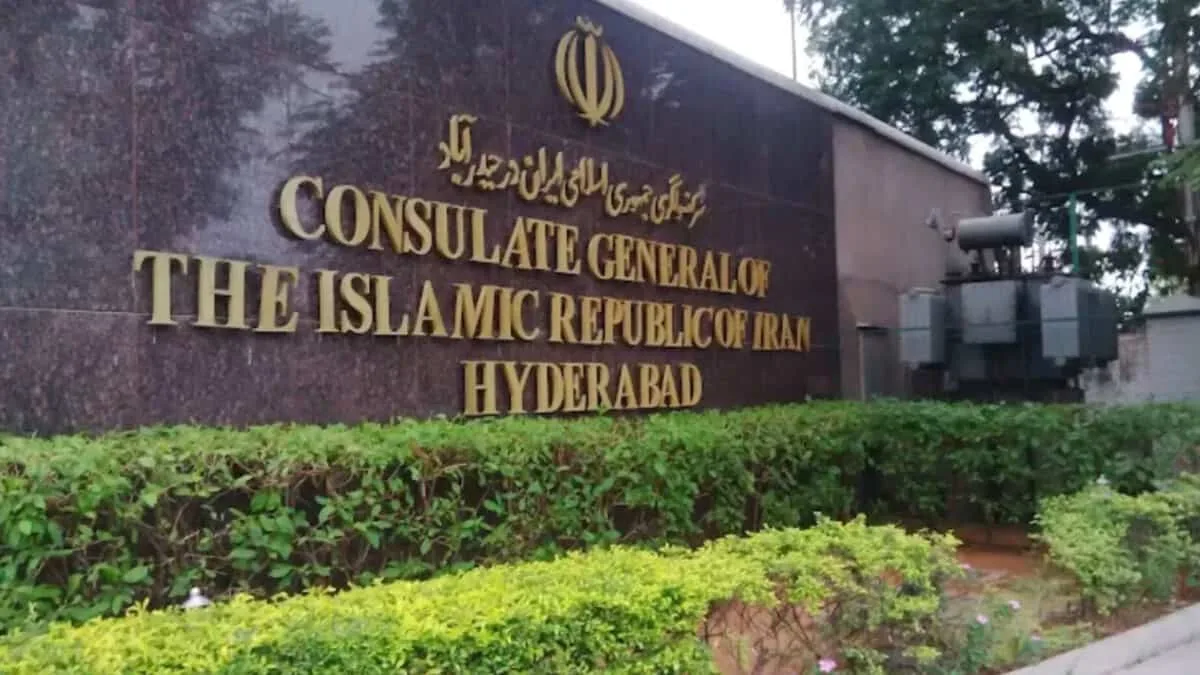
Hyderabad: At the 47th anniversary of the Victory of the Islamic Revolution of Iran, speakers called the present year a difficult year for the Iranian people.
The event was organised by the Consulate General of the Islamic Republic of Iran in Hyderabad at the Trident Hotel in Hitech City on Saturday, February 7.
The event was attended by Consul Generals and Honorary Consuls General, diplomats, vice chancellors and directors of universities, faculty members of academic institutions, scholars, senior bureaucrats, members of the media, Ullemas, and members of the Iranian community in the city.
Addressing the gathering, speakers expressed their dismay that certain Western governments and media outlets portrayed Iran’s counter-terrorism measures as “suppression of peaceful protests.”
“The peaceful protests turned violent, resulting in the deaths and injuries of law-enforcement personnel and civilians. The high number of injured police officers was cited as evidence of restraint exercised by law-enforcement agencies amid violence by terrorist groups,” the speakers said.
On Friday, US President Donald Trump imposed an additional 25 per cent tariff on goods imported into the country from any nation that “directly or indirectly purchases, imports, or otherwise acquires any goods or services from Iran.”
The development comes after talks between the two countries in Oman, following several weeks of threats from both sides.
“Despite what was described as maximum pressure and coercive policies by the United States, Iran entered negotiations in good faith regarding its peaceful nuclear programme. However, following five rounds of talks and agreement to a sixth round, a military attack against Iran was carried out by the Zionist regime with the participation of the United States,” the speakers said.
They said the Islamic Republic remains resolute in defending its sovereignty and national security while remaining committed to diplomacy as the preferred means of safeguarding national interests and promoting regional peace and stability.
The speakers spoke about the historical significance of the 1979 Islamic Revolution. “The revolution is not merely a change in political authority but the beginning of a new era rooted in popular participation, freedom, justice, and resistance to domination,” stated a release.
Despite persistent regional and international challenges over the decades, the Islamic Republic of Iran has continued on this path, relying on domestic capabilities, social cohesion, and skilled human resources, the release said.
The event focused on the historical and cultural relationship between India and Iran, spanning thousands of years. Iranian influence during the Qutb Shahi period, when Hyderabad was referred to as “New Isfahan,” and landmarks such as the Charminar were cited as enduring symbols of this shared heritage.
An exhibition showcasing Iranian handicrafts and carpets, including hand-woven silk carpets, was also organised on the occasion, highlighting Iran’s rich artistic and cultural heritage.