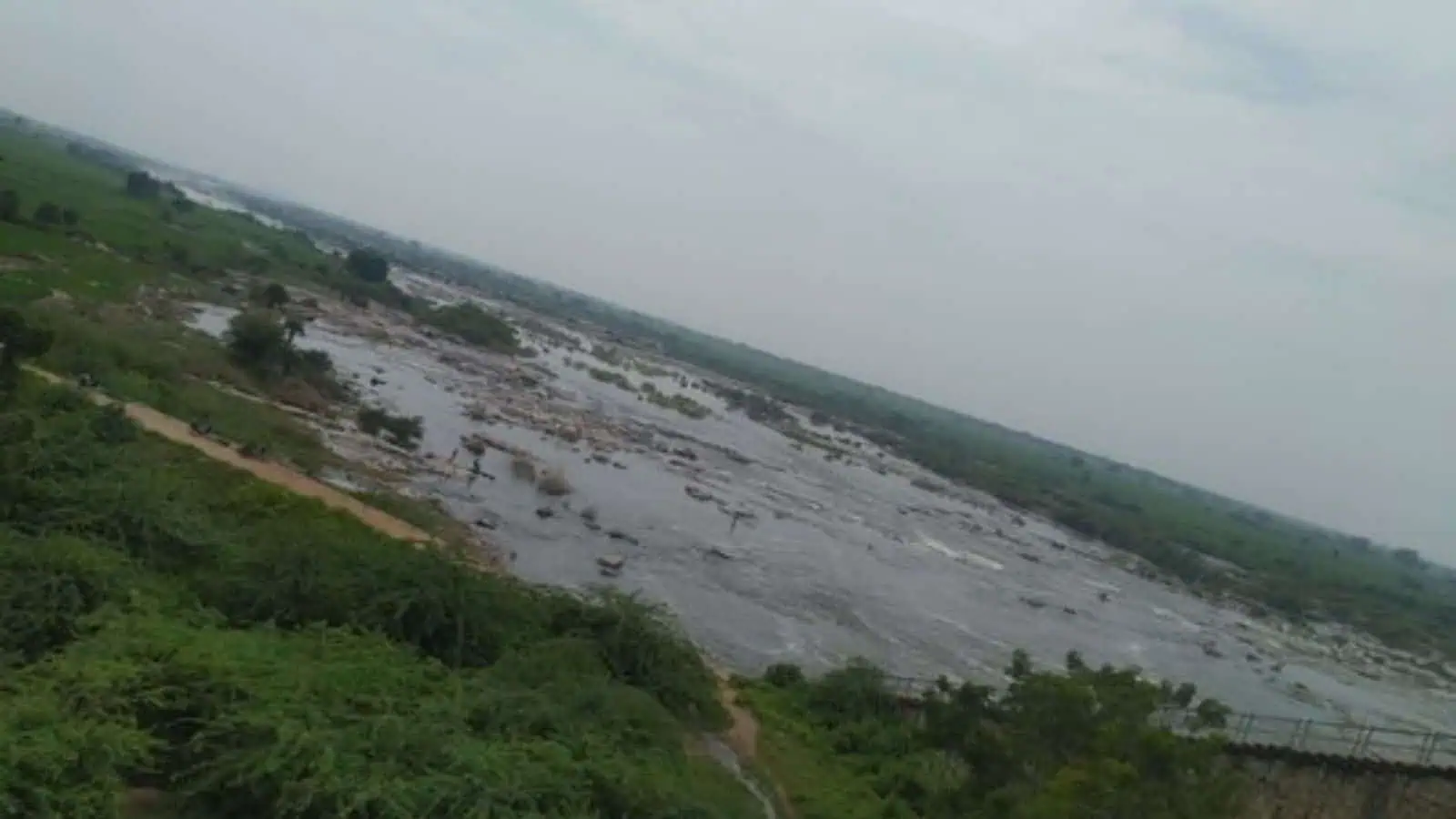
Hyderabad: Farmers living downstream and tail-end banks of the Musi river of three southern Telangana districts urged the state government to restore and revitalise a magnificent irrigation network established during the Nizam era, comprising 24 major Katuvas (weirs/anicuts) and hundreds of subsidiary canals interconnected with them- as part of the Musi Riverfront Development Project.
The irrigation system in the undivided Nalgonda district helps replenish tanks and reservoirs in nearly 70 villages. Originally built to support agriculture across 25,000 acres, it now caters to cultivation over 1.12 lakh acres.
In a letter addressed to the three-member ministerial committee headed by Deputy Chief Minister Bhatti Vikramarka to register their suggestions and opinions on the Musi Riverfront Development Project, the farmers and their leaders informed that the stone masonry of the irrigation network’s canal embankments that were constructed long ago has deteriorated and reached a critical state of repair.
“The sluice mechanisms responsible for releasing water into the sub-canals have become rusted. The canals themselves have become overgrown with Brahmajemudu (prickly pear) and Sarkaru Tumma (Prosopis juliflora) vegetation, resulting in a chaotic and obstructed condition of the irrigation network,” the farmers stated, urging the state government to restore the irrigation system.
They also called for desilting and cleaning of around 70 minor irrigation tanks in the region, which are currently choked with chemically contaminated sediments.
“Musi River water reaches approximately one hundred villages across twenty mandals spanning three districts. The lives of the people in these villages are inextricably intertwined with the Musi River,” the letter read.
They also highlighted the plight of the sizable fishermen community and said that before the river became polluted, the fish from the local tanks had strong demand, with those from the Edulabad irrigation tank were exported as far away as Kolkata.
“You know precisely how the effluent—comprising drainage water from the twin cities combined with chemical waste from industries—has destroyed our lives, our livestock, our sheep, our fisheries, our crops, our palm and date-palm toddy sources, and indeed, our entire existence,” the farmers stated.
They also informed that over a hundred women have suffered miscarriages in the last two decades and their livestock, sheep and goats were unable to reproduce effectively, owing to the pollution. “Nearly 40 per cent of the harvest consists of mere chaff,” the letter read.
Demanding a special relief package for the fishermen’s community, the farmers stated that the Edulabad tank, which has a water storage capacity of 2 TMC (Thousand Million Cubic Feet); needed to be restored and revived to its former glory.
The farmers also demanded an allocation of Rs 1,000 crore under the project to be utilised by farmers in the 70 affected villages lying on the banks of the Musi River, as compensation for the devastation that has plagued their lives for the past three decades.
The farmers also urged the state government to extend the project, which is now only up to Gourelli village, till Solipeta village in Kethepally mandal (i.e., extending as far as the Suryapet Project constructed on the Musi River).
They also requested the ministerial committee, constituted to gather feedback regarding the Musi Project, to visit their villages and personally listen to their views.
“We must be included as stakeholders in this project,” the farmers demanded.