Hyderabad: On a normal day, for 37-year-old Salman, a Rapido bike ride from his house in Somajiguda to his workplace, Lakadi-ka-pul, is less than a Rs 50 ride.
On Wednesday, March 25, Salman could not book a ride, no matter which app he opened. “Usually, I get charged between Rs 33 and Rs 40. Today, I was charged Rs 65- Rs 67. And even after agreeing to pay that amount, I waited for 20 minutes to get a ride, but in vain,” he said.
He finally decided to take his own transport.
Nida, a 22-year-old social media manager, lives near Nilofer Hospital, also faced the same issue. “I could not get an auto. It kept showing me to add an extra amount as drivers were not accepting my ride. I finally came to the office paying Rs 100,” she said.
Salman and Nida’s accounts are mirroring thousands of Hyderabadis who rely on Rapido, Uber or Ola for their daily commute. This has become the daily morning ritual for the last couple of days.
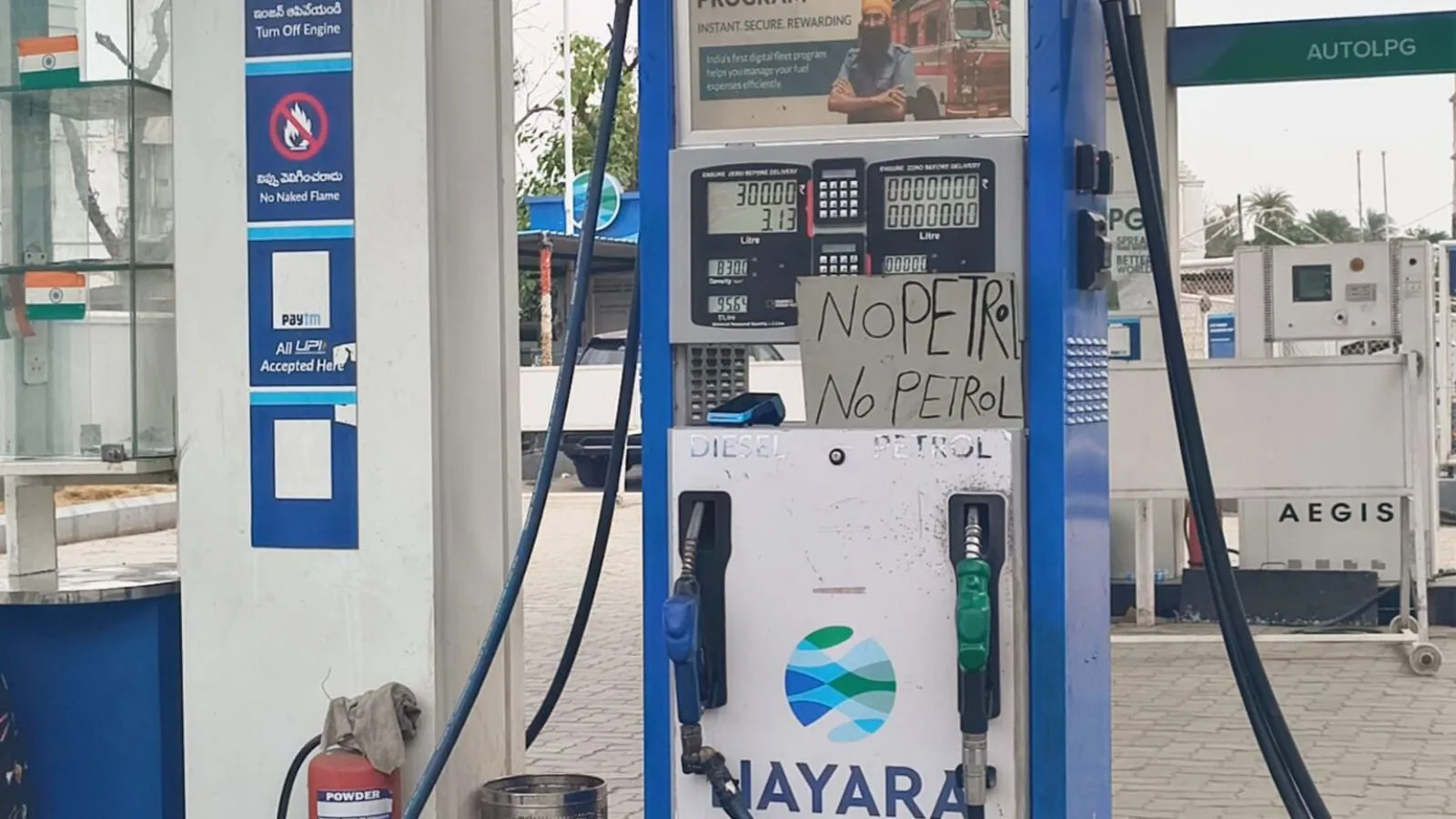
The city has been witnessing long queues stretching for a kilometre at fuel stations in areas like Mehdipatnam, Rajendernagar, Attapur, Lakdi-ka-pul, Banjara Hills, Madhapur and so on. Videos have surfaced showing many spending hours just to refuel, meaning fewer cabs are available during the rush hours.
Most LPG fuel stations have been temporarily closing, leaving auto drivers stranded at their usual spots with nowhere to refuel and fewer passengers to ferry.
Hence, for a driver, accepting a Rs 60 ride is not helpful when they have to wait hours for fuel.
Fuel station owners say panic buying is at the root of the crisis. Shaik Sohail, owner of Royal Fels station, said four fuel tankers were being emptied in a single day. “The company is providing fuel only after advance payment. It is sufficient for 4-5 days, but panic buying is causing the shortage,” he told Siasat.com.
Authorities, including the government, maintain there is no shortage of fuel and blame the crisis on panic booking.
Addressing a press conference, Minister for Civil Supplies N Uttam Kumar Reddy and Civil Supplies Commissioner Stephen Ravindra categorically denied a shortage of fuel and said there is enough stocks for the next three months and that supply is currently running well ahead of demand.
“Supply is more than the demand. We are providing excess supply,” he emphasised, adding that an additional 16,000 kiloliters of buffer stock has already been arranged and 1,200 extra tankers have been pressed into service to keep fuel stations fully stocked. Any temporary “no stock” boards visible at a few outlets were only because tankers had not yet arrived, he clarified, and not due to any actual shortage.
The minister revealed that oil marketing companies — Indian Oil Corporation Ltd (IOCL), Bharat Petroleum Corporation Ltd (BPCL) and Hindustan Petroleum Corporation Ltd (HPCL) — have ramped up supplies. On the day of the briefing, against a demand of 17,246 kilolitres (KL), the companies supplied 17,898 KL, leaving an excess of nearly 652 KL.
While the war in the Middle East has disrupted global supply chains for crude oil, LNG, and LPG, India has managed to secure adequate crude supplies through its diversified sourcing strategy, tapping markets in West Africa, Latin America and the United States.
However, disruptions in liquefied natural gas (LNG) have emerged after facilities of India’s largest supplier, Qatar, were hit by the conflict. In response, supplies have been prioritised for domestic consumption and CNG, with some curtailment for industrial users such as fertiliser plants.
Liquefied petroleum gas (LPG) has been the worst affected, as India depends on imports to meet nearly 60 per cent of its demand, much of it sourced from Gulf countries now impacted by the war. This has forced the government to prioritise household consumption, while cutting supplies to commercial users such as hotels and restaurants by at least half.