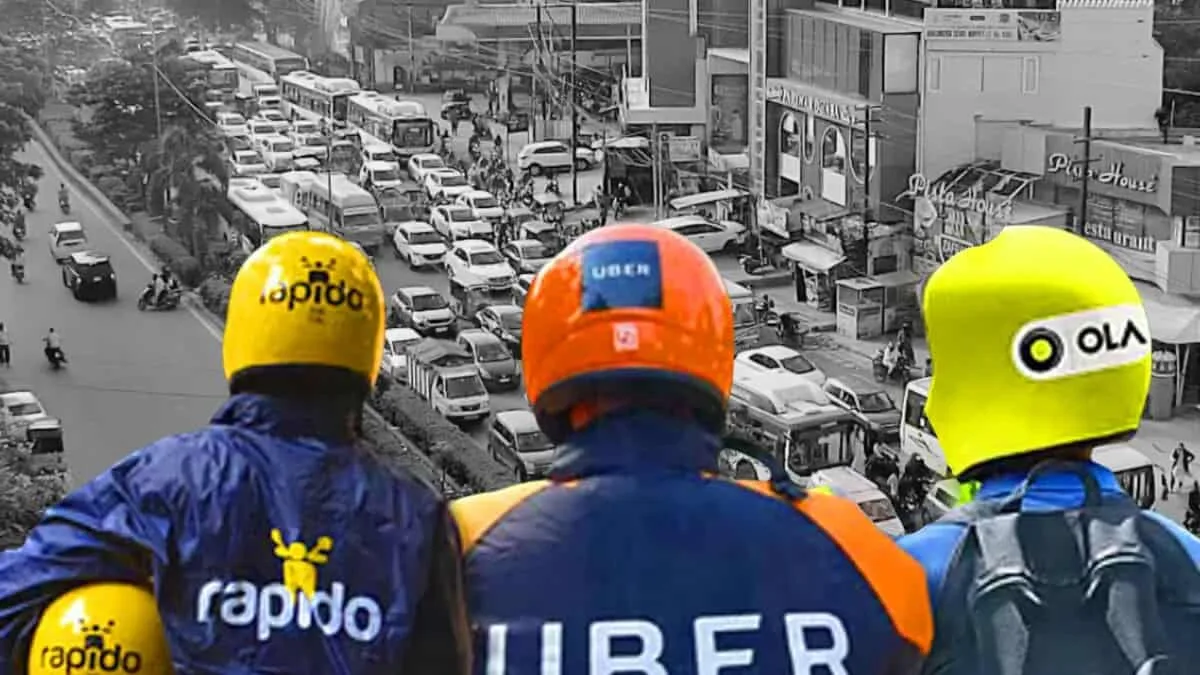
Hyderabad: The nationwide strike on Saturday, February 7, called by the Telangana Gig and Platform Workers Union (TGPWU), the Indian Federation of App-Based Transport Workers (IFAT) and other labour bodies impacted delivery services and commute in Hyderabad and other major cities like Mumbai, Bengaluru and Delhi.
The strike, which began from 11 am and will continue for six hours, has seen Ola, Uber and Rapido drivers switch off their apps simultaneously.
Nida, who resides near Nilofer Hospital, commutes daily to Lakdikapul for work. Speaking to Siasat.com, she said she found it difficult to find an auto. “I tried to book an auto from Uber and Rapido, but nothing was getting booked. I waited for a good 10 minutes before taking a local auto,” she said.
However, to get a local auto was also cumbersome because of the ongoing pipeline work and the fire at the Telangana Forensic Science Laboratory in Nampally. “Usually, it takes five minutes to come to the office. But today, I had to walk for 10 minutes before a local auto took me to my workplace. I reached the office in half an hour,” she said.
Another local who uses Rapido bike as his daily commute from Somajiguda could not find any. “I usually book a Rapido bike, but because I could not find any for a long time, I tried booking an Uber bike. Ultimately, nothing worked, and I had to drive to work on my own vehicle,” he told Siasat.com.
In Ameerpet, which is one of Hyderabad’s busiest commercial areas, a few auto rickshaws plied the road. A video of their colleagues persuading them to join the strike has also emerged.
Which cities will be impacted the most?
Cities such as Delhi, Mumbai, Bengaluru and Hyderabad are likely to see the maximum impact of the Ola, Uber strike as the reliance of app-based taxi services is considerably higher there.
Maharashtra
The Maharashtra Kamgar Sabha also echoed TGPWU, saying the strike aims at opposing the “arbitrary” fare policies of ride aggregators, seeking strict enforcement against “illegal” bike taxi operations that were affecting the livelihoods of licensed cab and autorickshaw drivers.
The union representing gig workers also alleged that the mandatory installation of panic buttons has become a financial burden for operators.
“While there are 140 panic button device providers approved by the central government, the state government has declared nearly 70 per cent of these companies unauthorised. As a result, cab drivers are being forced to remove previously installed devices and spend approximately Rs 12,000 unnecessarily to install new devices, causing severe financial hardship,” the statement said.
The drivers’ body also raised concerns over loss of income due to an increase in the number of autorickshaws under the open permit policy, and alleged that victims of accidents involving illegal bike taxis are denied insurance benefits.
Meanwhile, Transport Minister Pratap Sarnaik warned the ride aggregators that if they behave unfairly with the drivers and do injustice to them, the government will take appropriate action against the companies.
He also said the government was ready to stand by the drivers on all their genuine issues.
“Passengers should not suffer because of the strike. Drivers should clearly communicate what support they expect from the state government. We are ready to stand by them on all genuine issues,” he said, underlining that officials of the Regional Transport Office (RTO) were also coordinating with the driver organisations.
“If the owners of Ola, Uber or Rapido are behaving incorrectly and doing injustice to drivers, the state government will take appropriate action against them,” he said.
What is the strike about?
The strike has been called by the TGPWU, flagging long-pending and unresolved issues, including demanding fair fares, legal compliance and an end to exploitation by aggregator companies, faced by app-based drivers like Ola, Uber and Rapido working across the country.
The nationwide strike brought transport services to a standstill in Telangana, Karnataka, Assam, Maharashtra and Delhi, among other states.
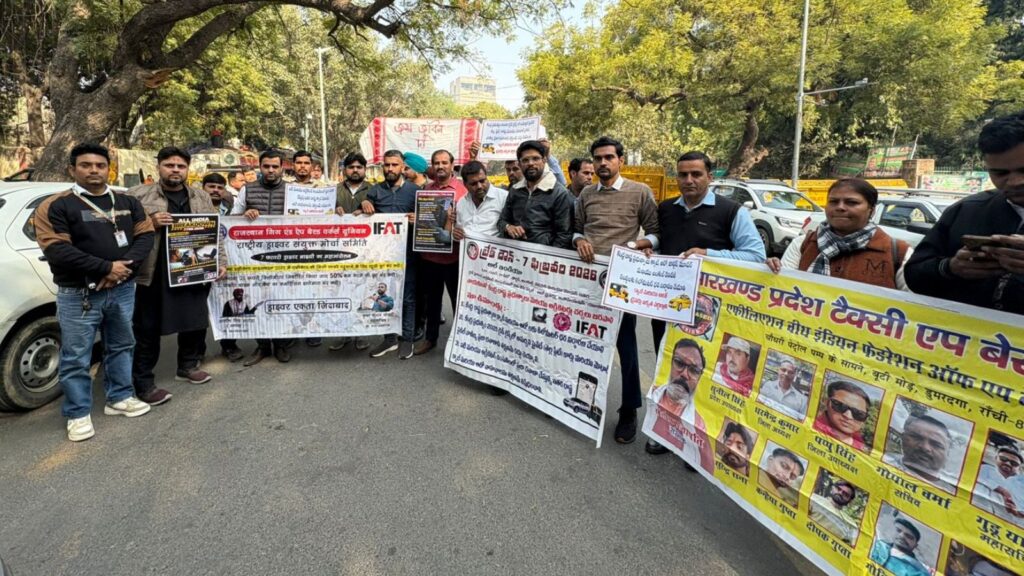
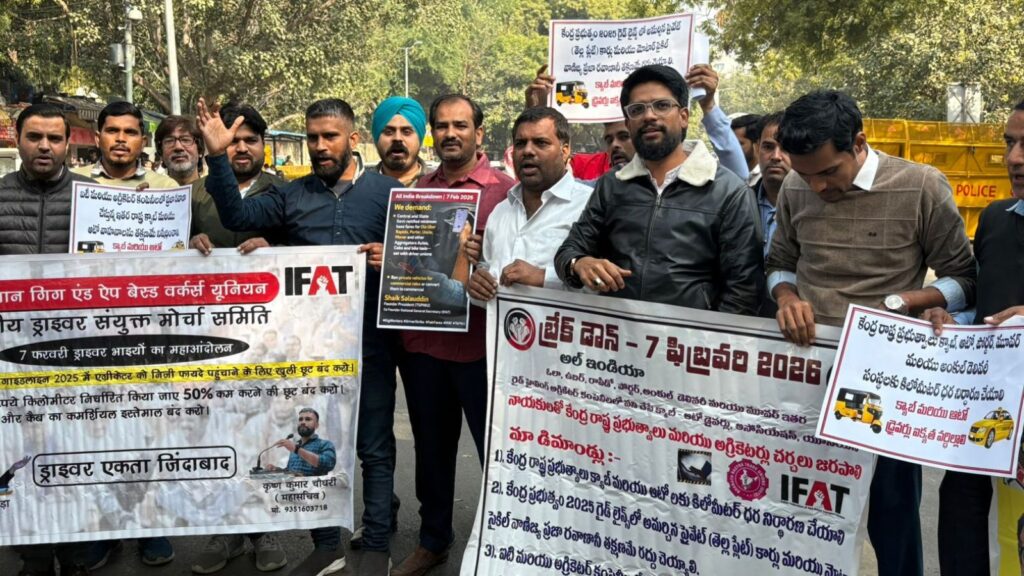
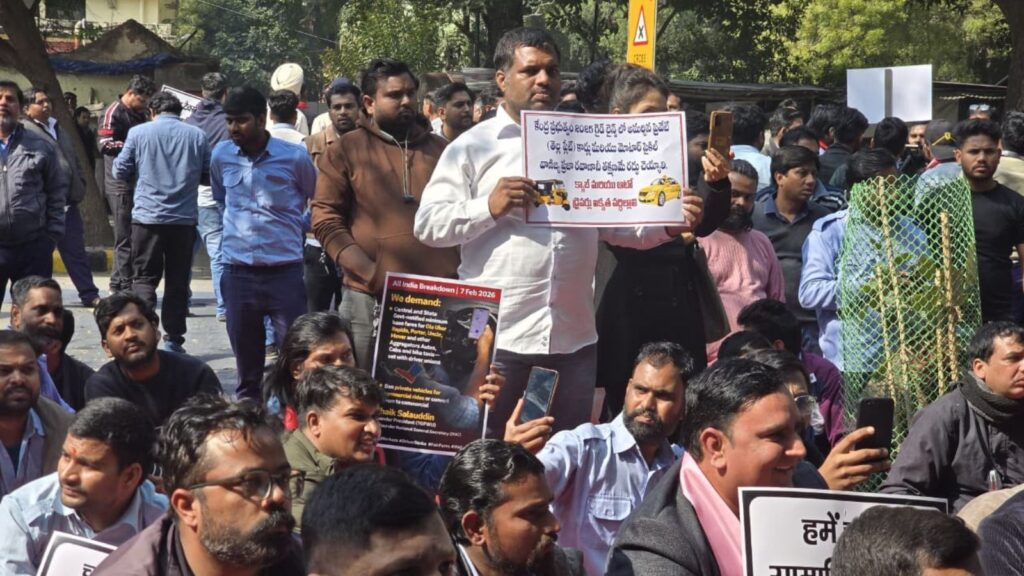
“Over six lakh, associated with Ola, Uber, Rapido, Porter, and other app-based platforms, participated in the breakdown. Workers and all-India union leaders assembled at Delhi’s Jantar Mantar protested, demonstrating unprecedented national unity of app-based transport workers,” a release from TGPWU said.
According to Shaik Salauddin, the TGPWU founder and co-founder and National General Secretary of IFAT, aggregator companies continue to violate the Motor Vehicle Aggregator Guidelines, 2025, which mandates governments to notify minimum base fares in consultation with recognised worker unions. “The continued inaction of governments has given aggregator companies a free hand to exploit workers. Today’s All-India Breakdown is a clear warning that app-based transport workers will no longer bear the cost of policy failure,” he said.
If the government continues with its whims and fancies, there would be a bigger strike between March 22 and 23, he warned.
Key demands
- Immediate notification of minimum base fares for app-based transport services.
- The Centre should consult with all recognised worker unions as required under the Motor Vehicle Aggregator Guidelines, 2025.
- No private vehicles (non-commercial) should be used for commercial passenger and goods transport, and, if yes, the vehicle should be registered under the commercial category.
- TGPWU and IFAT urge the central and state governments to immediately initiate a dialogue with worker representatives and ensure fair, lawful, and sustainable regulation of the app-based transport sector.
(With PTI inputs)