
By Dhonti Narasimha Reddy
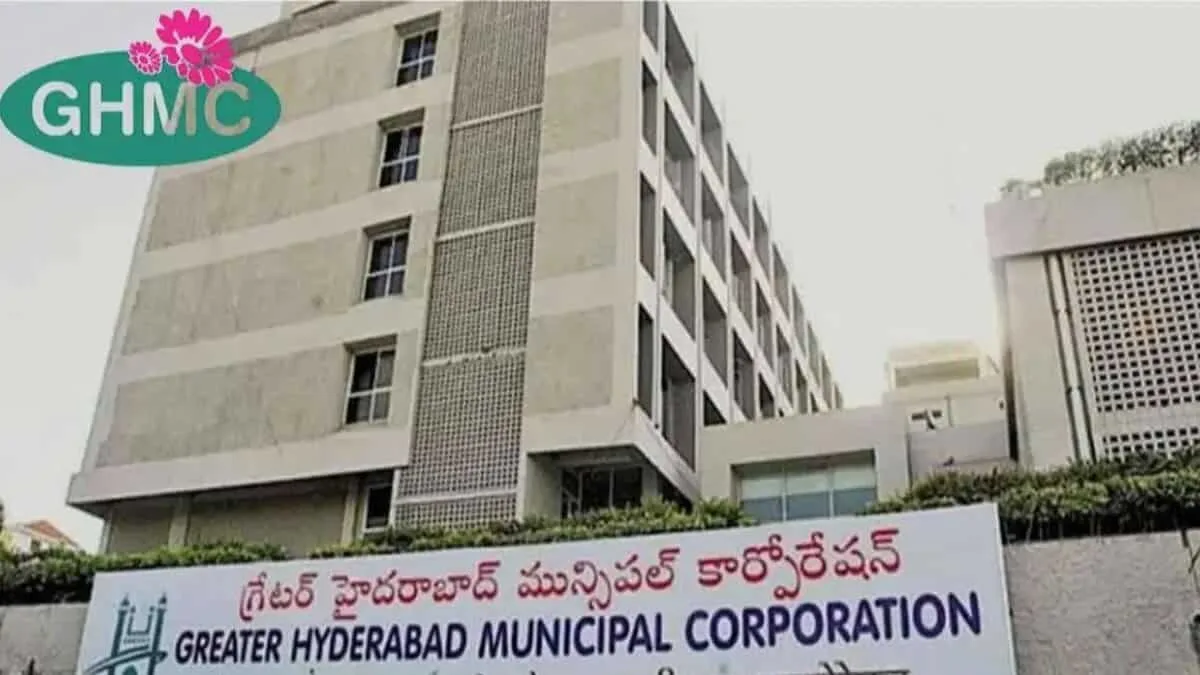
Recent headlines celebrated Hyderabad becoming India’s “largest city” after the Telangana government merged 27 municipalities into the Greater Hyderabad Municipal Corporation (GHMC).
This framing obscures a critical distinction: the city’s geographic area is one thing, the municipal corporation’s jurisdiction is another. Media outlets failed to report the more accurate story – a local government’s administrative boundary expanded, not the city itself.
This reflects a troubling pattern where government announcements are amplified without analysis, leaving citizens confused about what’s actually happening. The ease with which municipal boundaries are redrawn – easier than creating new districts, far easier than forming new states – reveals how casually state governments manipulate local governance structures.
Hollowing of local democracy
India’s Constitution defines three levels of government: central, state, and local (panchayats and municipalities). In recent decades, this federal structure has steadily eroded. The central government increasingly encroaches on state subjects. State governments, in turn, have systematically stripped powers from local bodies, reducing elected representatives to ceremonial figures while concentrating authority with bureaucrats.
The previous Telangana government exemplified this trend through amendments to municipal and panchayat laws. A 2018 provision empowered Additional District Collectors to remove sarpanches for offences as minor as tree-cutting or fund misuse. The 2019 Municipal Act weakened municipal autonomy further, transferring substantive powers to collectors and commissioners.
Today’s local representatives – councillors, corporators, sarpanches, ward members, Mandal Parishad Territorial Constituency (MPTC) and Zilla Praja Parishad Territorial Constituency (ZPTC) members – operate as festival idols: visible during elections, powerless between them. They control no budgets, make no independent decisions and handle no appointments. Their role is limited to personal political advancement, party displays in council meetings, and following orders from senior leaders. Beyond accepting occasional grants from state or central governments, they can do virtually nothing for constituents independently.
Local bodies have become captive to bureaucratic and centralised rule, all justified by allegations of corruption, nepotism and reckless permissions against local representatives.
The centralisation project
Last year, through 26 government orders issued in a single day, approximately 98 per cent of Telangana‘s territory came under urban development authorities. These authorities encompass municipal and panchayat jurisdictions. The media didn’t headline this as Telangana becoming “the largest state.” Both that expansion and today’s GHMC merger serve one purpose: centralised bureaucratic control.
Urbanisation is often presented as a natural modern trend. In India, it’s engineered. By concentrating all government investment – education, employment, healthcare and infrastructure – in capital cities and large towns, while systematically weakening rural economies, policymakers force rural populations to migrate. Then they claim urbanisation “necessitates” expanding municipal boundaries.
History of expansion
The GHMC’s expansion isn’t new. In 2007, the Hyderabad Municipal Corporation (MCH) merged with 12 surrounding municipalities and eight gram panchayats to form the GHMC – the first major expansion transforming Hyderabad into a metropolitan corporation.
Over 40 years, the municipal area has grown dramatically:
1980s: MCH covered approximately 54 sq km.
2007: GHMC formation expanded it to 625 sq km.
2025: After merging 27 municipalities within the Outer Ring Road, it reaches 2,053 sq km.
The government now plans to divide this into three or six corporations, then re-integrate them under a single authority. What’s the benefit of merging, splitting, re-integrating and ultimately placing everything under one entity? The pattern is clear: “funds are ours, decisions are ours” – a mantra for consolidated control.
Compare this to other major cities. The New Delhi Municipal Council (NDMC) governs only 43 sq km. Mumbai has one corporation. Chennai too. Recently, Bengaluru was split into five corporations, then placed under the Greater Bangalore Authority (GBA), chaired by the chief minister. Hyderabad appears to be following the same centralisation playbook.
The revenue reality check
The government justifies the merger by claiming consolidated funds enable “grand plans.” But the financial math reveals a different story.
Major Indian municipal corporations (FY 2025-26):
- Mumbai (BMC): Rs 43,159 crore revenue
- Bengaluru (BBMP): Rs 19,930 crore budget
- Chennai (GCC): Rs 8,267 crore collections
- Delhi (MCD): Rs 4,300 crore target
- New Delhi (NDMC): Rs 4,444 crore revenue
Hyderabad’s gross city income is estimated at Rs 8 lakh crore. However, the GHMC’s total revenue is barely Rs 5,000 crore, with tax revenue only Rs 2,000 crore. The merger might add another 25 per cent, bringing total revenue to perhaps Rs 6,000-6,500 crore – still a fraction of what Mumbai or Bengaluru collect from smaller areas.
The GHMC couldn’t collect adequate revenue from 625 sq km (Rs 3,500 crore). How will it collect from 2,053 sq km? The merger adds land, not revenue-generating capacity. Taxes haven’t increased in a decade. The real asset being consolidated is land – public land that can be sold to service debt, pay interest, and fund projects.
This explains the true motivation: not improved governance but access to land banks across 27 municipalities for monetisation.
Functional fragmentation
While other major corporations handle comprehensive responsibilities, GHMC’s functions have been systematically fragmented through decentralisation – or more accurately, de-responsibility:
Not under GHMC jurisdiction
Water supply and sewerage (Water Board)
Education and healthcare (State government)
Many roads (various authorities)
Urban planning (HMDA)
Nominally under GHMC but without full control
Waste management (primary function retained)
Street lighting (partial)
Some local roads
This merger expands geographic jurisdiction without restoring functional authority. The GHMC becomes larger on paper while remaining hollowed out in practice – a “bubble expansion” with no substance.
What’s missing?
No prior study assessed whether the merger benefits the 27 municipalities. How will it solve existing civic problems? The 2007 merger made civic issues more complex in the absorbed areas. Enlarging and centralising institutional structures increases problems rather than solving them.
Good governance requires transparency and planning – both undermined by centralisation. With over a hundred common issues plus area-specific problems across diverse municipal regions, priorities get ignored or dictated by a few decision-makers. Already, the GHMC has concentrated infrastructure investment in limited areas over the past 20 years, abandoning the rest.
What Hyderabad actually needs
The city faces environmental pollution, water scarcity, limited sewerage systems and rising public health issues. The merger adds no capacity to address these. What might help:
- Urban commission: Previously recommended, never implemented. Could coordinate between various agencies with fragmented responsibilities.
- Master plan: The HMDA plans around the city, but Hyderabad itself has no comprehensive master plan. A plan based on current land use could make the merger’s expanded jurisdiction useful.
- Functional restoration: Return water, sewerage, education, healthcare and roads to municipal control instead of scattering responsibility across state agencies.
- Revenue reform: Actual tax collection improvements rather than land sales to fund operations.
The bottom line
This merger serves no public interest. It wasn’t conducted democratically – no consultation with affected municipalities, no study of benefits, no analysis of revenue implications. It reduces democratic governance while increasing bureaucratic control.
Centralised, anti-public, opaque decision-making will increase. Small and large civic problems will persist without additional resources to solve them.
Hyderabad doesn’t need to be the “largest municipal corporation.” It needs functional decentralisation, transparent planning, democratic participation and adequate revenue collection. Instead, it’s getting ceremonial expansion that concentrates power, monetises land and distances governance further from citizens.