
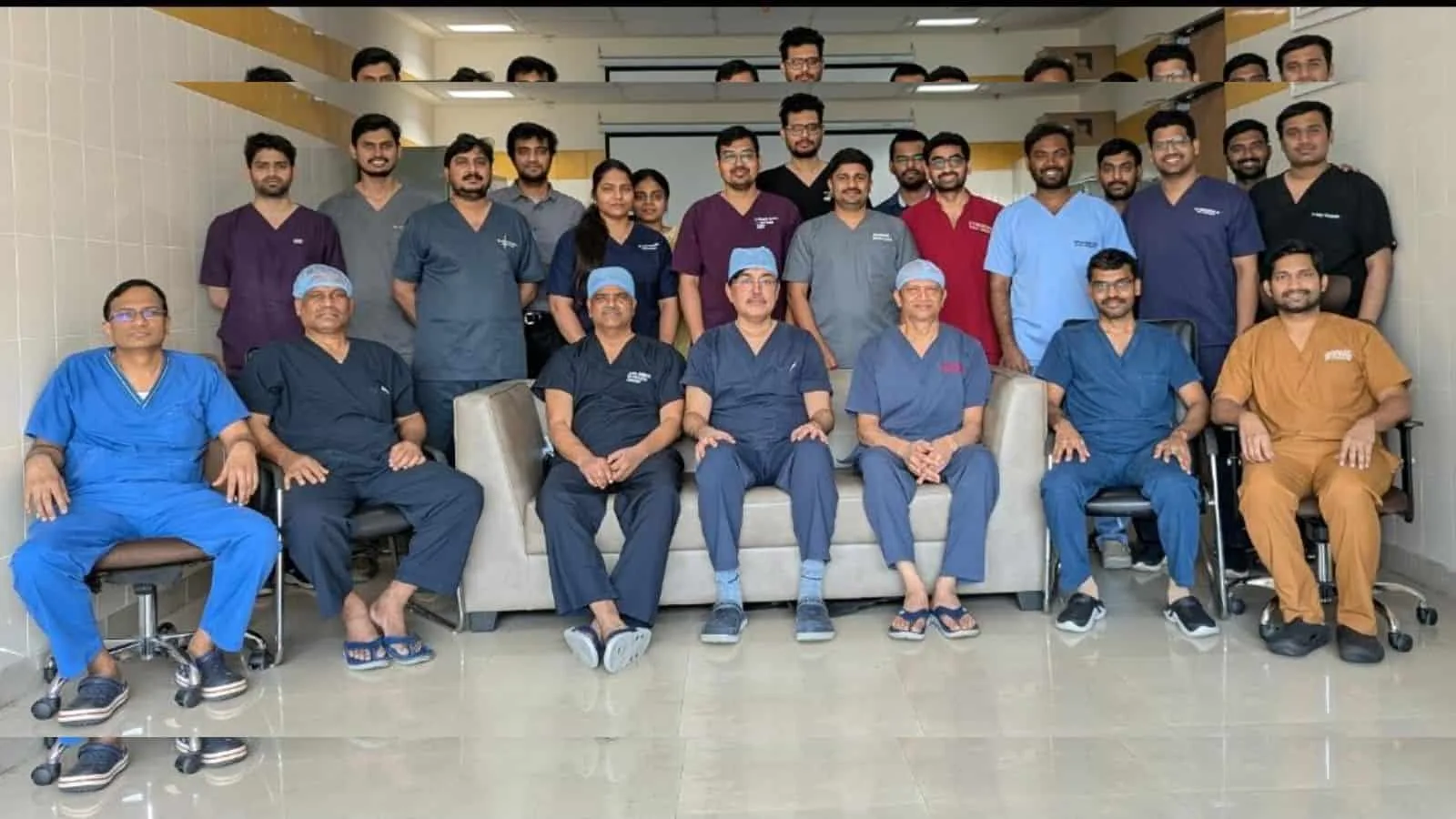
Hyderabad: The Department of Urology at Nizam’s Institute of Medical Sciences has achieved a major milestone by successfully completing 2,000 kidney transplants, emerging as one of the country’s leading renal transplant centres in the government healthcare sector.
Transplant programme at NIMS began in 1989
The renal transplant programme at NIMS began in 1989 with its first kidney transplant and has since grown into one of India’s most trusted public-sector transplant programmes.
Officials said the achievement reflects decades of clinical expertise, coordinated teamwork, and sustained commitment toward treating patients suffering from end-stage renal disease.
According to the institute, the transplant programme has witnessed rapid growth over the years. Between 1989 and 2010, NIMS carried out 448 renal transplants. Another 552 transplants were completed between 2011 and June 2017, followed by 500 procedures between June 2017 and January 2023.
The latest 500 kidney transplants were completed within just three years and four months, highlighting the programme’s accelerated expansion and operational efficiency.
Doctors at the institute said the department has handled several highly complex procedures, including kidney transplants involving multiple renal vessels requiring advanced vascular reconstruction, pediatric renal transplantation, and repeat transplants in patients with previously failed grafts.
First robotic renal transplant in a govt hospital in South India
In another significant development, NIMS performed the first robotic renal transplant in a government hospital in South India earlier this year, underlining the institute’s push toward advanced and technology-driven patient care in public healthcare settings.
Apart from transplant services, the Department of Urology performs nearly 11,000 urological surgeries annually. More than 500 robotic surgeries have been conducted over the past three years alone.
The institute also reported strong clinical outcomes for transplant recipients. Live-related renal transplant cases recorded graft survival rates of more than 95 per cent at one year, over 90 per cent at three years, and nearly 85 per cent at five years.
Cadaver transplant outcomes were also encouraging, with graft survival rates remaining above 90 per cent at one year and around 80 per cent at five years.
Officials noted that nearly 95 per cent of transplant recipients received treatment free of cost through the Aarogyasri Healthcare Scheme and the Chief Minister’s Relief Fund, making advanced renal care accessible to economically disadvantaged patients.
The renal transplant programme is headed by Dr. Rahul Devraj along with a multidisciplinary team of surgeons, nephrologists, anesthesiologists, nursing staff, and allied specialists.
Dr. Rahul Devraj credited the Departments of Anaesthesia, Nephrology, Radiology, Pathology, Clinical Pharmacology, and the nursing teams for the programme’s success.
He also acknowledged the support of Dr. Bheerappa Nagari and thanked chief minister A Revanth Reddy and health minister Damodar Raja Narasimha for supporting the strengthening of renal transplant services at the institute, a press release said.
Calling the achievement more than a statistical milestone, NIMS officials said the completion of 2,000 kidney transplants symbolises “2,000 lives restored and renewed hope for countless families.”