At a time when conversations around design and heritage often feel surface-level, an evening at Hyderabad‘s Jawaharlal Nehru Architecture and Fine Arts University (JNAFAU) offered something far more layered. In collaboration with the Crafts Council of Telangana, the university hosted the third edition of We Speak, a growing platform that brings artisans and contemporary thinkers into the same room to examine the evolving life of Indian crafts.
This edition unfolded as a thoughtful exploration of how these traditions survive, adapt, and sometimes transform entirely in the modern world.
A demonstration of Bidri
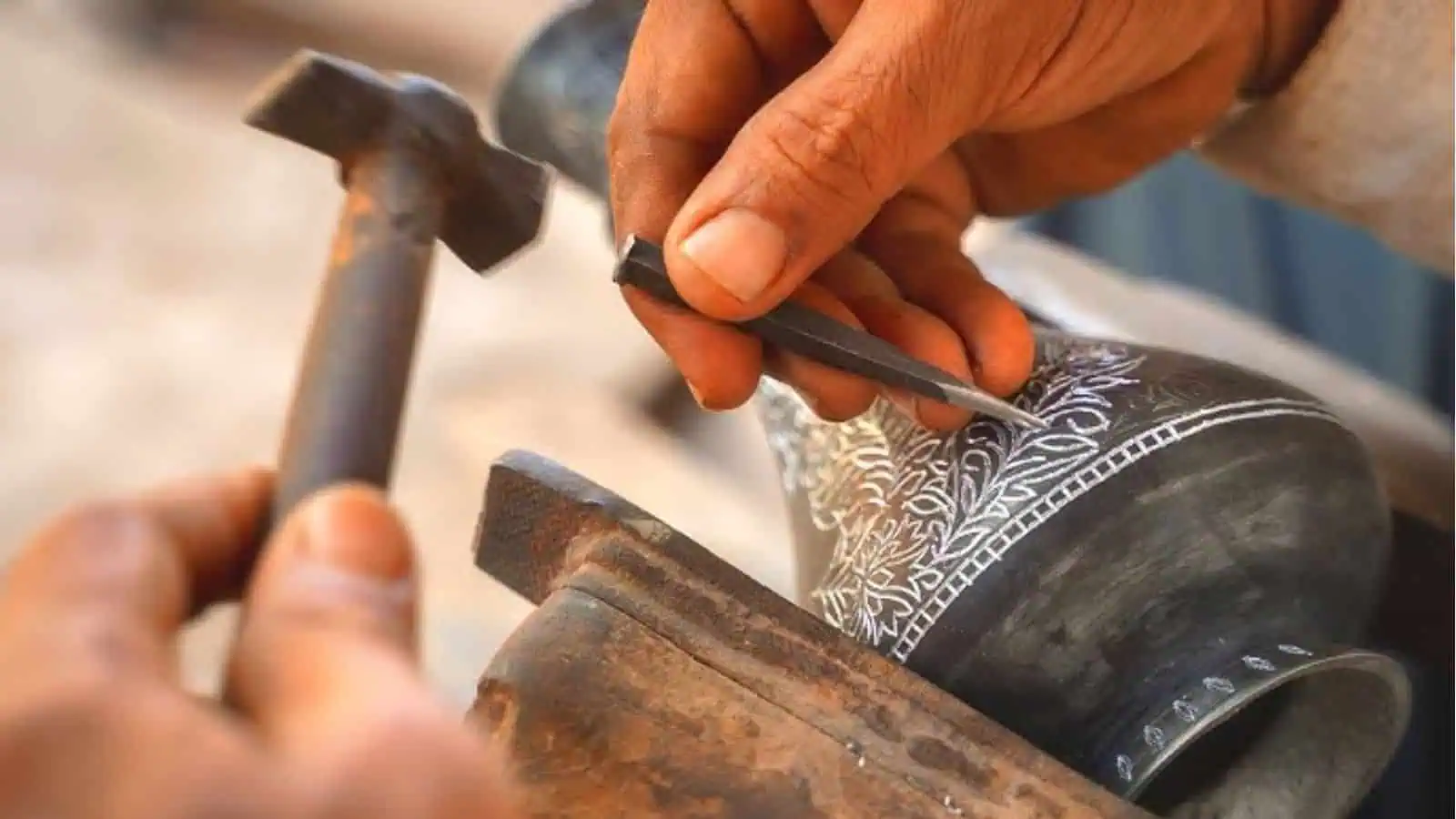
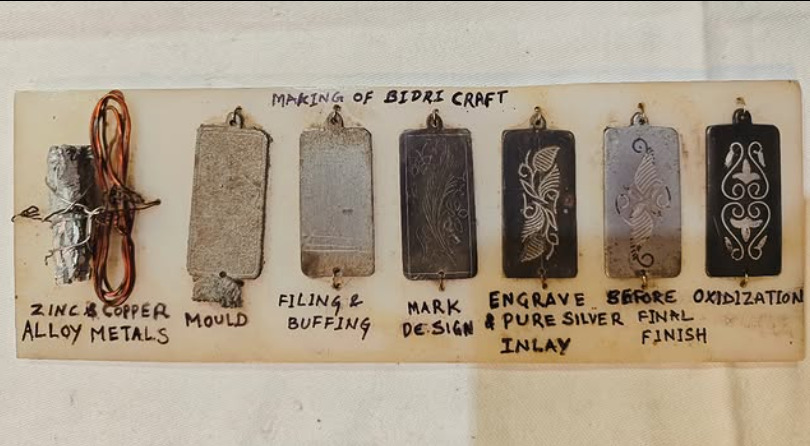
On April 15, the evening began with a live demonstration by Taher Siddiqui, a third-generation practitioner from Mahboob Bidri Craft. What followed was not just a technical walkthrough, but an intimate look into the making of Bidri. Siddiqui walked the audience through the process: the moulding of a zinc or copper alloy base, the careful inlay of silver, and finally, the dramatic transformation through oxidation.
The most compelling moment came when he revealed the role of soil from the Bidar Fort in achieving that signature black hue. Boiled with ammonium chloride, the soil triggers the oxidation process that defines Bidri’s visual identity. Yet, even within such a tradition-bound practice, innovation finds its way in. Siddiqui shared that he has developed his own alternative method, one that eliminates the need for Bidar soil altogether. “Of course, I can’t share that recipe,” he joked.
For Taher, the future of Bidri lies in relevance. Moving beyond purely decorative objects, he spoke about adapting the craft into contemporary, everyday use. “I always knew I would work here, in this craft. It’s in my blood,” he said, framing his journey as both inheritance and choice. He also pointed to technologies like 3D printing as potential tools for younger designers to reinterpret and sustain the craft.
Interplay of art and craftsmanship
If Siddiqui’s session grounded the audience in material and method, 3D Designer Sachitanand Sharma expanded the conversation into theory. His talk, centred on the “continuously shifting interplay of art and craftsmanship,” challenged long-held assumptions about the hierarchy between the two.
Sharma began with a simple yet provocative observation: while phrases like “the art of engineering” or “the art of presenting” are commonplace, “craft” rarely appears as an analogy. This linguistic bias, he argued, reflects a deeper cultural hierarchy, one that elevates art while sidelining craft, despite both requiring mastery.
Introducing what he called the “three Ns” of the art world—novelty, nuance, and narrative—Sharma suggested that contemporary art often prioritises narrative above all else. In doing so, it sometimes neglects the nuance and novelty inherent in traditional crafts. Through examples like Dokra, he illustrated how artists often reinterpret craft forms through storytelling, while craftsmen remain focused on preserving techniques passed down through generations.
At the heart of his argument was the distinction between tangibility and intangibility. Craft, he noted, is deeply tangible as it carries with it history, folklore, and a sense of place. Yet, paradoxically, this very rootedness often leads to it being undervalued. Art, on the other hand, operates in a more conceptual space, allowing it to command greater visibility and prestige.
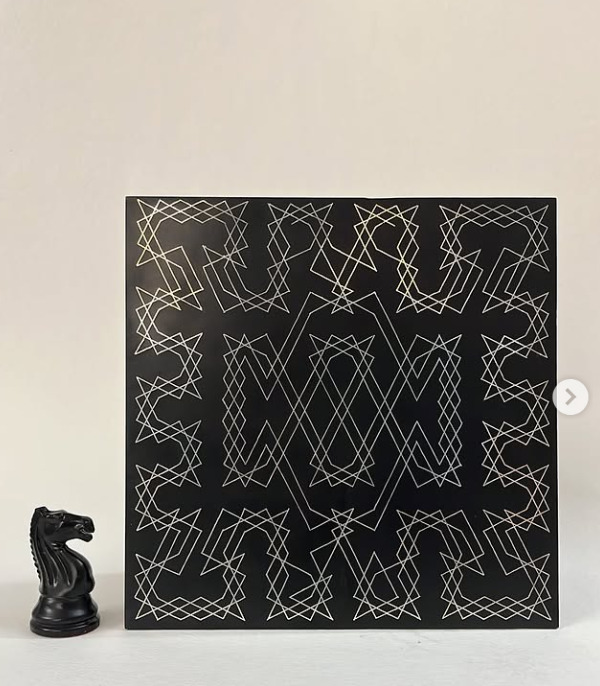
Sharma also addressed the complexities of collaboration and reinterpretation. Referencing how artists like Stephen Cox engage with materials like Bidri, he pointed out how such interventions can sometimes strip the craft of its motifs and cultural context, reducing it to aesthetic elements like colour and form. This raises an uncomfortable but necessary question: at what point does reinterpretation become erasure?
The idea of fusion was another point of contention. Sharma urged the audience to consider its limits. How much can a craft be altered before it loses its identity? Yet, he also acknowledged that India itself is a product of centuries of cultural blending, where many art and craft forms have evolved through continuous exchange. Perhaps, he suggested, fusion is not the problem, but the lack of critical engagement with it.
By the end of the evening, what lingered was not just a deeper understanding of Bidri or craft theory, but a renewed awareness of the delicate balance between preservation and innovation. In bringing together hands that create and minds that question, We Speak continues to carve out a space where India’s craft heritage is not only celebrated but also critically examined.