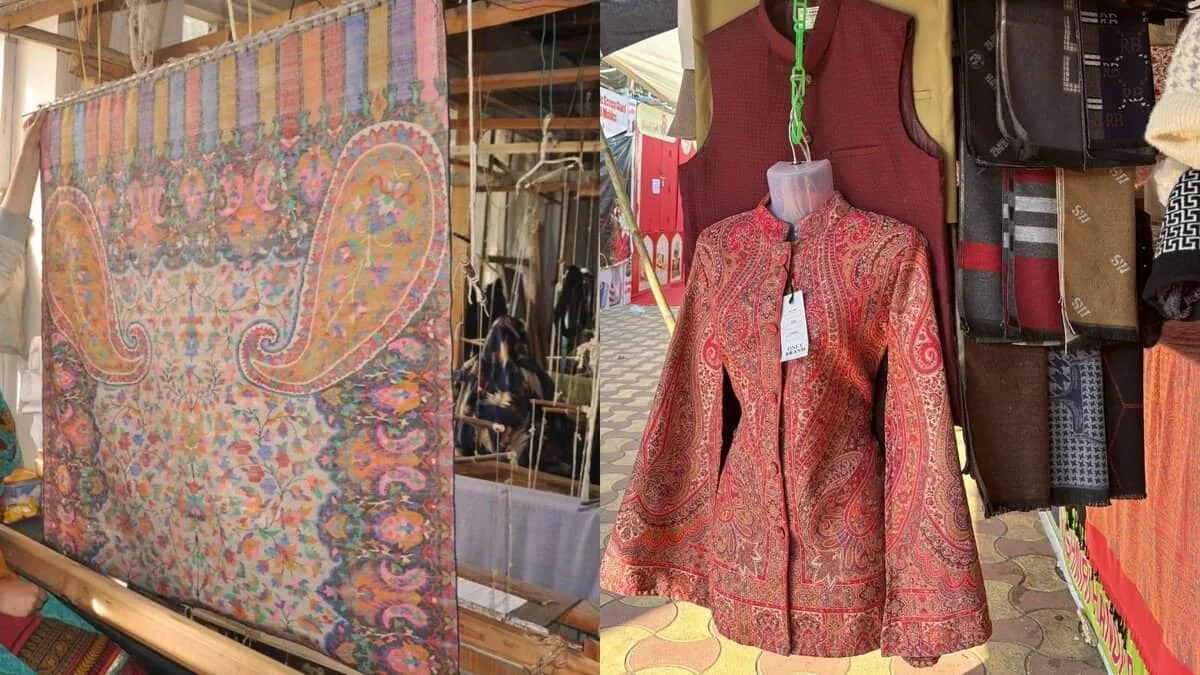
Some visit Numaish for the food, some for the entertainment, and some for the shopping. What many do not realise is that history, too, is sold here, wrapped in soft pashminas and woven into intricate patterns.
How many times have we walked past the Kashmir clothing section at Numaish, pausing briefly to admire the colours, the symmetry of the designs, the quiet elegance of the shawls on display, before moving on? Rarely do we stop to consider the centuries-old craftsmanship behind these textiles, or the patient hands that weave each motif thread by thread. Yet, in these familiar stalls lies Kani weaving, a centuries-old Kashmiri craft that has travelled across time and geography to find its place in Hyderabad’s most beloved fair year on year.
What is Kani?
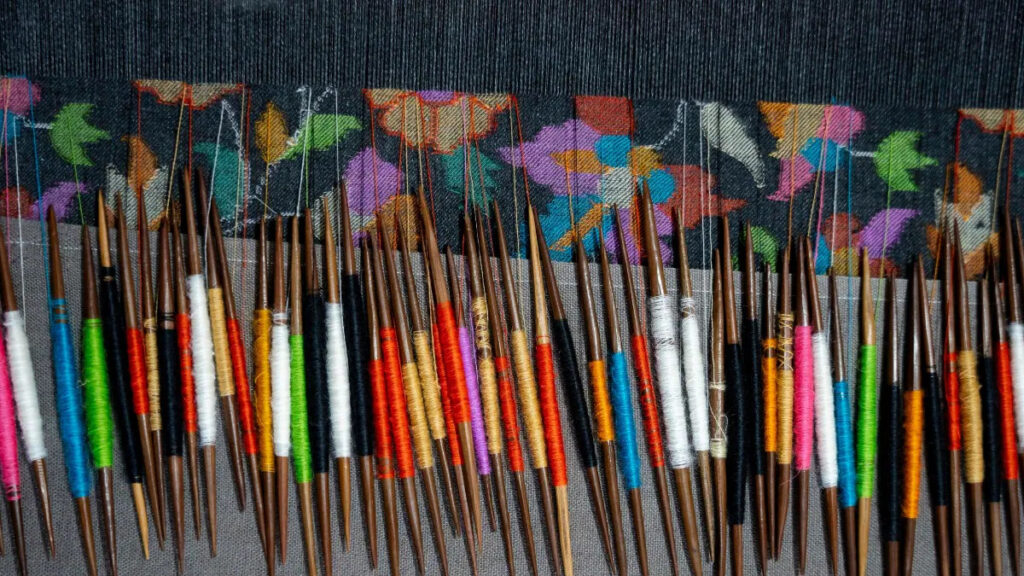
Touted as one of the oldest handicrafts of Kashmir, Kani gets its name from its origin village, Kanihama, in the valley. Interestingly, it also gets its name from the small wooden needles, or kanis, that weavers use instead of a shuttle to create intricate designs directly on soft Pashmina wool. Every colour is guided by hand, following a coded pattern called Talim, which tells the weaver exactly where each thread should go.
“Kani haath se banta hain. Back in the day, Kani Shawls were made with tilli (or kani), and now they are made using a shuttle similar to carpets,” says Manzoor Ahmed, owner of Rex Kashmir Art Palace, who is currently selling in Numaish.
The craft is believed to have taken shape during the Mughal era in the 16th century, when these finely patterned shawls were prized by royalty. In fact, the Ain-i-Akbari records Emperor Akbar to be an avid collector of Kani shawls. Later, the craft found its way to markets across India and Europe. Today, Kani shawls are more than just textiles, they are wearable pieces of history.
Kani at Hyderabad’s Numaish
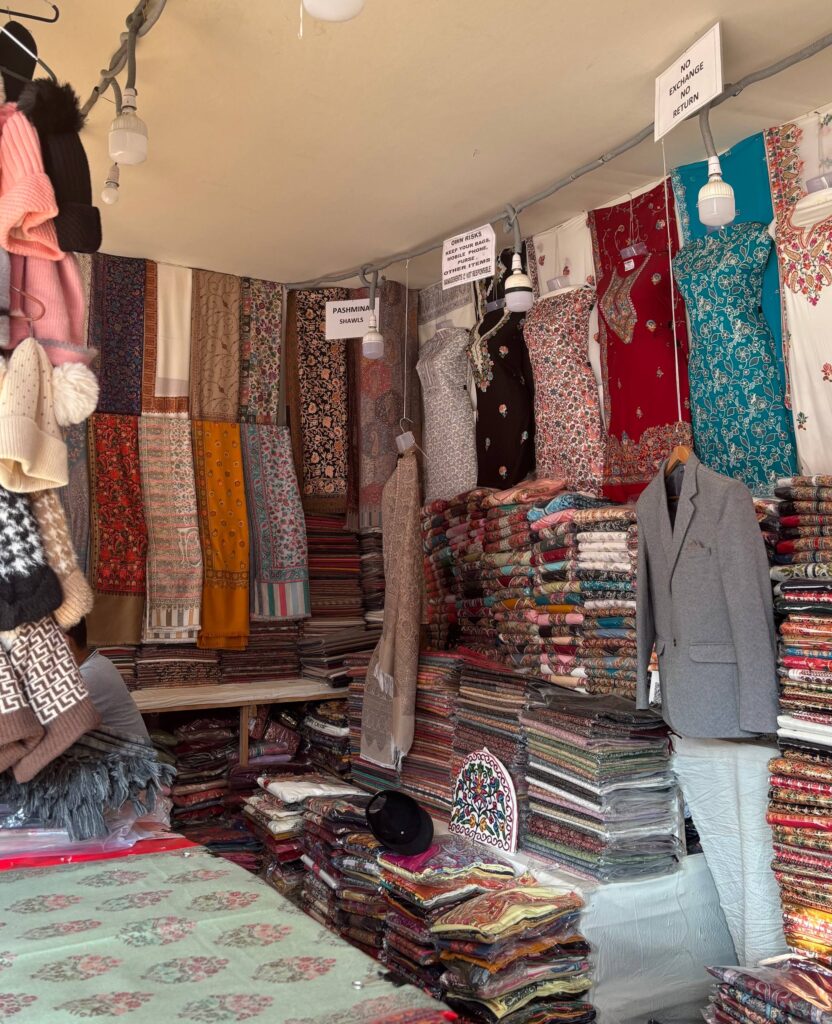
At Numaish, Kani sit alongside everyday stalls and festive attractions, letting visitors discover a centuries-old craft while shopping in the heart of Hyderabad. Amid the colourful chaos of food vendors, carnival rides, and bargain hunters, these shawls quietly command attention with their delicate patterns and soft threads.
One of the most familiar faces at Numaish is Manzoor Ahmed, owner of Rex Kashmir Art Palace, who has been putting up a stall at the fair for 68 years. “We sell Kani shawls, jackets, suits, and more,” he tells Siasat.com. “Prices here start from Rs. 1500 and go up to Rs. 10000.”
Manzoor explains that the shawls available at Numaish today are mostly machine-made and increasingly made on wool, whereas earlier Kani was woven entirely on pure Pashmina. Fully handmade Pashmina Kani, woven thread by thread following the traditional Talim system, remains a rare and expensive treasure.
He adds, “Fully handmade Kani shawls can cost Rs. 2.5 lakh or more, and are not sold at the Numaish. One reason premium pieces are not sold here is that regular visitors do not always understand the value of the work, and bargain a lot. But the true admirers of the craft are willing to buy shawls for higher prices too.”
Even so, the Kani textiles at Numaish carry the legacy of Kashmir’s centuries-old weaving tradition. For shoppers, each shawl offers more than just a purchase, it is a glimpse into history, craftsmanship, and artistry, all within the lively, colourful setting of Hyderabad’s most beloved exhibition.