
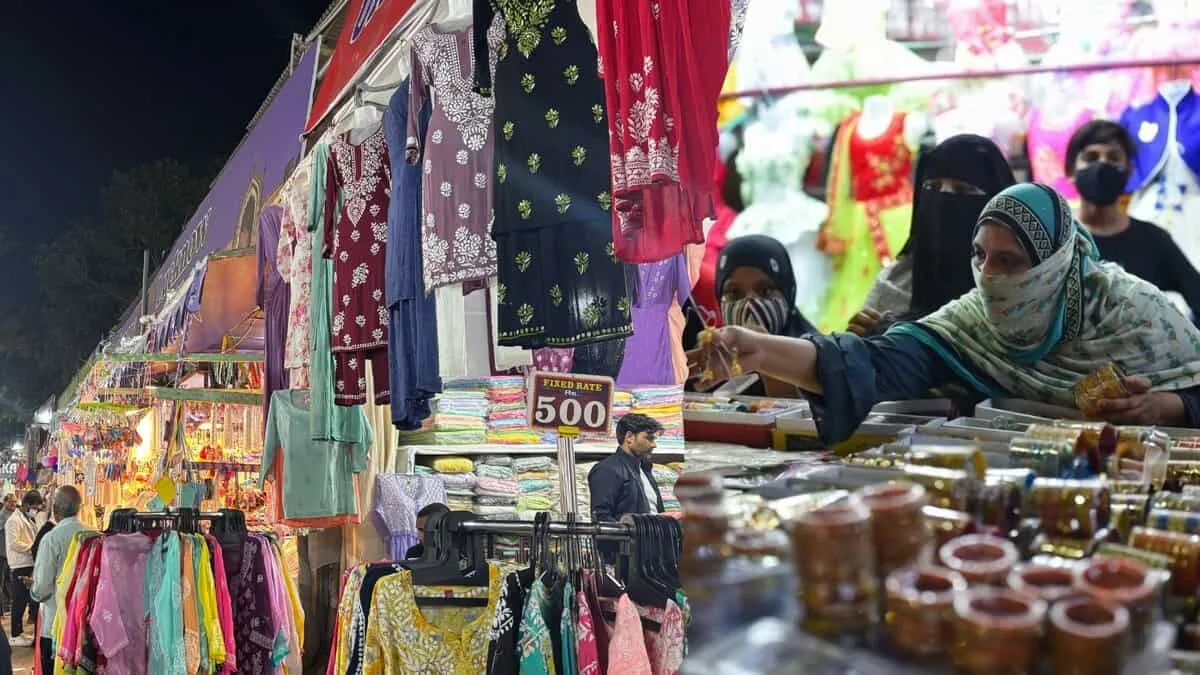
Hyderabad: Numaish and Hyderabad are made for each other. In fact, if Hyderabad ever applied for a soulmate, the All-India Industrial Exhibition – fondly and forever called Numaish – would win hands down. For Hyderabadis, the New Year doesn’t begin with fireworks or “new me, new goals” drama. It begins with the familiar question: “Chalo… Numaish kab jaayenge?”
And once it starts, the city behaves as if attendance is compulsory – like an annual exam, which one actually wants to appear.
Hyderabadis look forward to the fair with bated breath. Missing Numaish is simply not an option. You might skip a wedding, you might postpone a family function, you might even ignore a boring office meeting, but Numaish? Never.
The funniest part is that nobody is satisfied with one visit. Oh! no. One visit is considered amateur behaviour. Hyderabadis go to the Numaish the way people watch a long web series – season after season, episode after episode.
The first visit is just reconnaissance. A “survey mission.” The second visit is for window shopping and taking a quick bite of seekh kabab and other such spicy stuff. The third is for actual buying – after intense family-level negotiations. The fourth is for a relaxed “dekho-dekho” stroll, with a mental checklist of what was left unbought. Now, if you think this is the final visit, you clearly don’t know Hyderabadis.
Most families reserve the last visit for the day after the official closure. Yes, you read that right. Because you get the products for half the price. Moreover, in Hyderabad, rules are flexible, emotions are permanent, and Numaish endings are treated like tragic movie climaxes – nobody is ready to accept them.
Here’s an observation many have made after deep research, careful analysis and the kind of thinking that only happens while waiting near a stall holding bags and bored children: Who doesn’t know the famous saying, “Behind every successful man or a venture, there is a woman”?
Well, this holds good for Numaish too. Behind every successful stall, every shopping bag, every repeated family visit and every “just one more round”… there is a woman.
After serious contemplation, one would come to a conclusion that women are the mainstay of the Numaish. If there were no women, the exhibition would probably have ended decades ago – quietly, politely and with a small notice saying: “Closed due to lack of interest.” But, thanks to the fairer sex, Numaish has not only survived, but it has also thrived for 85 long years, which is more than many friendships, marriages and political promises.
Surely, it is women who are the driving force behind these repeated family expeditions. The men, meanwhile, have little choice. They accompany their spouses the way people accept fate – silently and with mild suffering. Willy-nilly, they go. Not because they want to. But because they know resistance is useless. And to be fair, men play their role brilliantly. They perform the second fiddle to perfection. Their contribution is mostly limited to:
- Standing away from the stall like abandoned luggage.
- Holding children who suddenly become extra active.
- Carrying bags that multiply faster than Hyderabad traffic.
- Looking interested while mentally calculating how soon they can reach the food section.
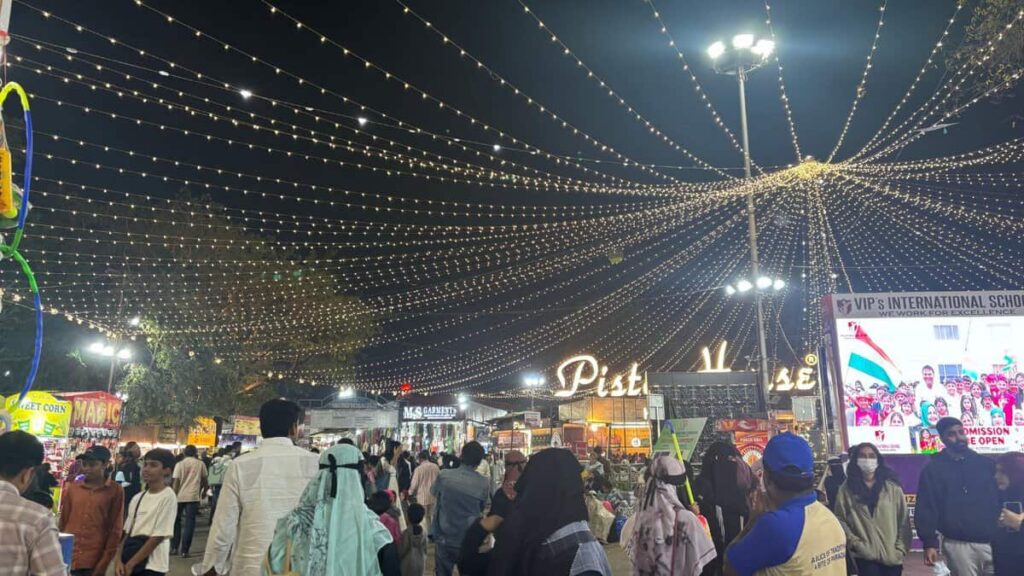
If you observe closely, you’ll see men positioned at strategic points – like security guards with no salary – while their better halves enjoy a full-scale shopping spree. Occasionally, the men will make a sudden dash to the stall. Not out of curiosity, mind you. Not because they like the product. They go for one noble reason: to settle the bill. That is their moment of glory. Their heroic scene. Their contribution to the economy.
Whether it’s textiles, readymade garments, artificial jewellery, home appliances – wherever you look, it’s women crowding, bargaining, comparing and collecting things with the efficiency of a professional procurement department. The men? They’re usually found outside, staring into space, ruing their thinning purse.
Women shouldn’t take this “shopping frenzy” as an offence. It’s simply in their genes – part tradition, part instinct. And without their lively energy, the Numaish would lose much of its charm and sparkle.
And if you ever want to find a place in Numaish that is calm, peaceful, and almost spiritual in its emptiness, go to the book stalls. Yes, the couple of book stalls sit there quietly, like introverts at a loud wedding, watching the crowd rush past them as if books are contagious.
But the Numaish isn’t only about shopping. For some, it’s also a trip down memory lane. The moment you enter, old melodies begin to float in the air – like a background soundtrack to Hyderabad’s collective nostalgia. The soulful voices of Mohammed Rafi, Lata Mangeshkar, Asha Bhosle and Kishore Kumar gently remind you of a time when songs had poetry and heartbreak came with good lyrics.
Aaj mausam bada beimaan hai…
Jhumka gira re…
Lag ja gale se phir…
Ye shaam mastani…
And just when you think people will leave after the last song:
Ye chirag bujh rahe hain mere saath jalte jalte… And suddenly, the entire Numaish maidan turns emotional. People don’t walk out. They drag themselves out, reluctantly, as if they’re leaving a beloved relative’s house after dinner.
Because that’s what Numaish is, really. Not just an exhibition. Not just a market. Not just a fair. It’s Hyderabad’s annual ritual – where wallets get lighter, hands get heavier with bags, and memories get richer. And when it finally ends, Hyderabadis don’t say goodbye.
They simply say: “Chalo… next year phir milte hain.”