
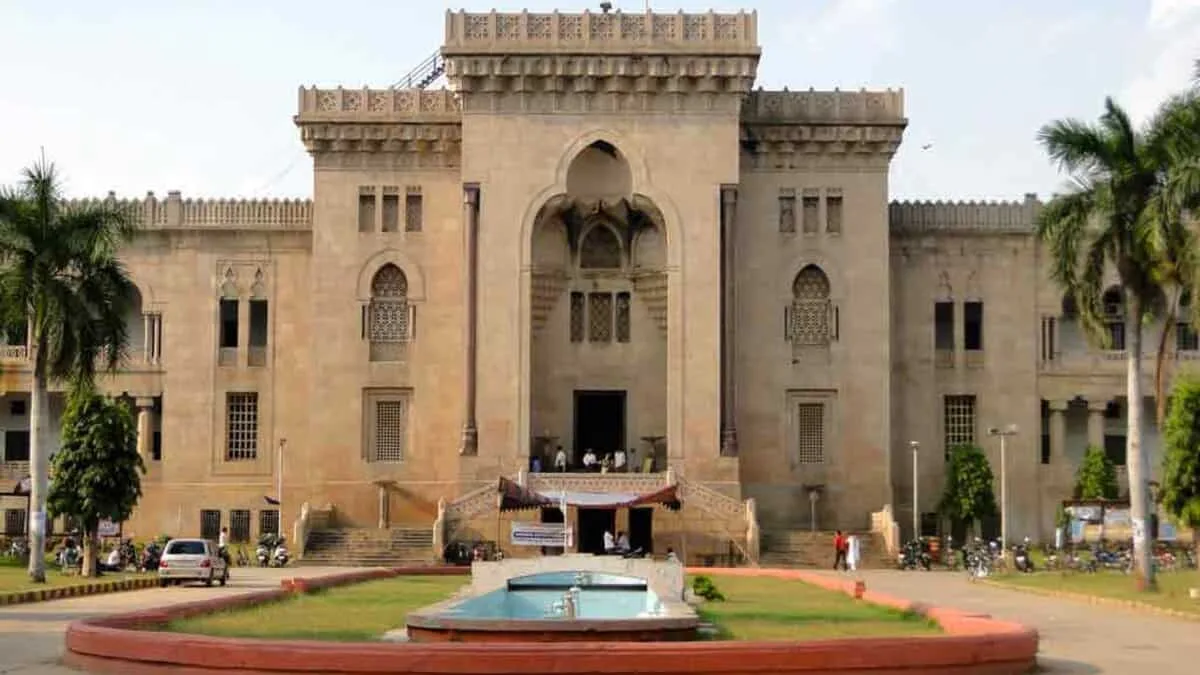
The Supreme Court has dismissed Osmania University’s plea challenging the Telangana High Court’s directive to regularise daily wage employees who had served the institution for nearly four decades.
A bench of Justice Pankaj Mithal and Justice SVN Bhatti delivered the judgment on Thursday, upholding the High Court’s November 2024 order and bringing relief to long-serving workers such as attendants, sweepers, ward boys, scavengers, drivers, and watchmen.
Bench makes remarks on public employment
During the hearing, the bench took serious note of the state of public employment, remarking that India’s youth were losing faith in securing government jobs due to the prolonged reliance on contractual, ad-hoc, and nominal muster roll (NMR) appointments.
Justice SVN Bhatti observed that many government institutions were cutting administrative costs by avoiding permanent recruitment, which in turn was forcing even postgraduates to accept low-paid contract work.
“They have already worked under you for four decades. We must recognise the new generation, but also give space to the older one. Today, the youth are losing hope in public employment,” he said, adding that postgraduate youth were being compelled to work on meagre wages of Rs 9,000–10,000 a month.
Bench highlights unfair treatment
Highlighting the unfair treatment of such employees, Justice Bhatti noted, “They may be appointed as gardeners, but are asked to handle administrative work.”
Justice Pankaj Mithal questioned the university’s persistence in litigation, stating, “You engaged them as daily wagers for decades. Once the court, after examining the facts, directed their regularisation and payment of wages as per rules, why come before us again?”
The bench subsequently dismissed the special leave petition filed by Osmania University, upholding the High Court’s order for regularising the daily wage workers.
Case background
In 1997, several daily wage employees from Osmania University approached the Telangana High Court seeking regularisation of their services. A single judge ruled in their favour in 1999.
The university challenged that decision, but the division bench later upheld it on November 8, 2024.
The OU Registrar then filed a special leave petition in the Supreme Court on November 24, 2025, contesting the ruling, which the apex court has now dismissed.