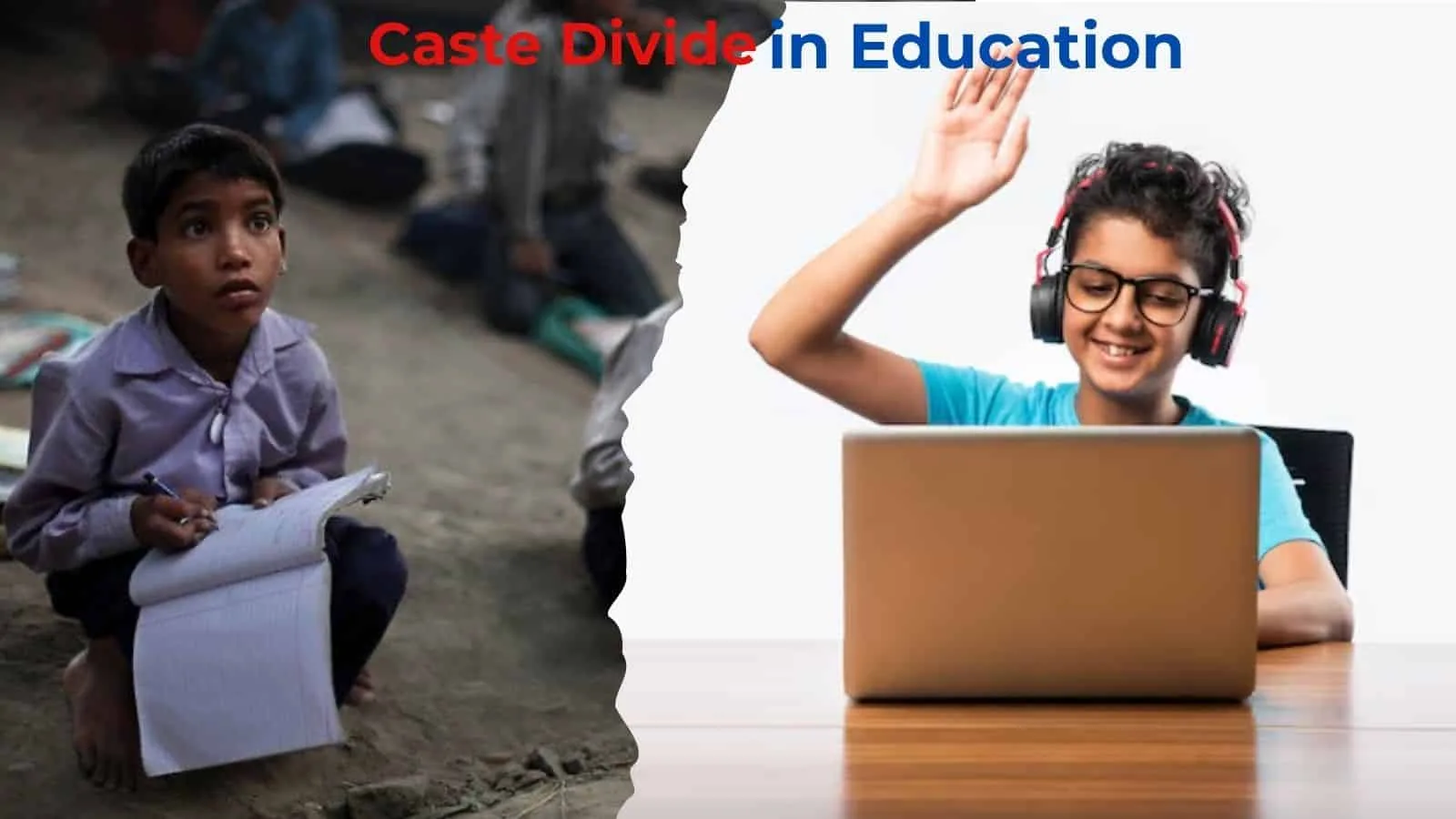
Hyderabad: A Brahmin child in Telangana is nearly seven times more likely to be studying in an English-medium school than a child from the Kolam tribe. A Goldsmith’s or Padmasali’s child is almost certain to be in an English medium school, while a Mudiraj child probably is not. Over a third of General Caste youth hold a diploma or a degree, while the number among Scheduled Tribes is barely one in four.
The Telangana government’s Socio, Economic, Educational, Employment, Political and Caste (SEEEPC) Survey 2024 unravels the uncomfortable gap between its most privileged and most marginalised communities.
The data, gathered from 3.55 crore people, was analysed by an Independent Expert Working Group (IEWG) constituted by the state in March 2025. It covered 242 castes across four broad social categories of Scheduled Castes (SC), Scheduled Tribes (ST), Backward Classes (BC) and General/Other Castes (OC).
What it shows, in eight indicators spread across school dropout rates, graduate attainment, type of schooling and access to English-medium education, is that caste continues to be the primary determinant of how far a child in Telangana will go in school.
The education gap
Across Telangana, 36.3 per cent of the population below age 30 has attained a diploma or higher. Among OC youth, that figure is 59 per cent. Among STs, it falls to 28.4 per cent. The SC figure is 34.4 per cent and BCs are nearly on the state average at 36.5 per cent.
Among the 56 major castes with populations exceeding 50,000, which together account for about 90 per cent of the state’s population, the variation is stark. OC Komatis, OC Velamas and OC Brahmins all record higher-education attainment of around 37 per cent, nearly twice the state average. However, the ST Kolam community records just 4.4 per cent, with SC Beda, ST Gond and BC-D Mali communities not far ahead.
The report also shows that OC Reddys, despite being a dominant landowning community in large parts of Telangana, score on higher education attainment roughly on par with BC-C SC Christians and BC-B Goldsmiths. About 62 per cent of Reddys live in rural Telangana, compared to just 30 per cent of Komatis.
The proportion of people whose education stops at the intermediate level (Class 12) is actually highest among SCs at 57 per cent, followed by BCs at 54 per cent and STs at 53 per cent. General Castes are the lowest at 44 per cent. This is not because General Caste communities are less educated, but because a higher share of them go beyond Class 12 to degrees and diplomas. Class 12, in effect, becomes a bottleneck for SC and ST, who are more likely to stop education there.
5 times higher school dropout rates among ST Kolam
The ST Kolam community has a 5.4 per cent school dropout rate among children, the highest among all 56 major castes. OC Brahmins record just 1.1 per cent, with the state average being 2.2 per cent.
Among STs, Gond children drop out of school at three times the rate of Lambadi children, the survey found. This points to “persistent challenges such as poor access to schools, economic hardship, and cultural barriers in tribal areas,” the report said.
The survey also found that 4.1 per cent of children across the state are illiterate, with ST Kolams recording the highest rate at 9.3 per cent. Among the 56 major castes, BC-B Perikas record the lowest at 2.3 per cent.
Private school gap is jarring
The government-versus-private school divide is one of the survey’s starker findings.
Across Telangana, 19.3 per cent of individuals have attended private or non-government schools. Among General Caste individuals, that share is 30 per cent, with OC Brahmins recording the highest private school attendance among any community at 38.3 per cent. Among SCs, only 9.6 per cent have attended private schools. For STs, it is 7.8 per cent, with ST Kolam children recording just 1.1 per cent.
Nearly half – 49.1 per cent – of SC children attended state government schools. The ST figure is 43.6 per cent, the BC figure 45.4 per cent and the General Caste figure 32.4 per cent. OC Jains, at 9.7 per cent, are the community least reliant on government schooling.
English-medium education
The English-medium divide is also jarring. Of Telangana’s youth below age 30, as many as 47 per cent said they studied in English-medium schools. For OC Brahmins, that share is 72.4 per cent. For ST Kolams, it is 10.7 per cent.
Within Backward Classes, the variation is very wide. Nearly 75 per cent of youth in Goldsmith and Padmasali households are English-medium educated. Among Mudiraj, Valmiki and Pitchiguntla households, the share is below 30 per cent. These communities share a reservation category but occupy vastly different educational realities.
Women carry the largest burden
Across Telangana, 65.5 per cent of women have studied below Class 10. Among ST Kolam women, 82.9 per cent have not studied beyond primary school. For OC Brahmin women, that figure is 36.2 per cent, the lowest of any community. The girl child marriage rate is highest among BC-A Gangiredlavaru at 8.1 per cent and lowest among OC Kapu at 2.1 per cent.