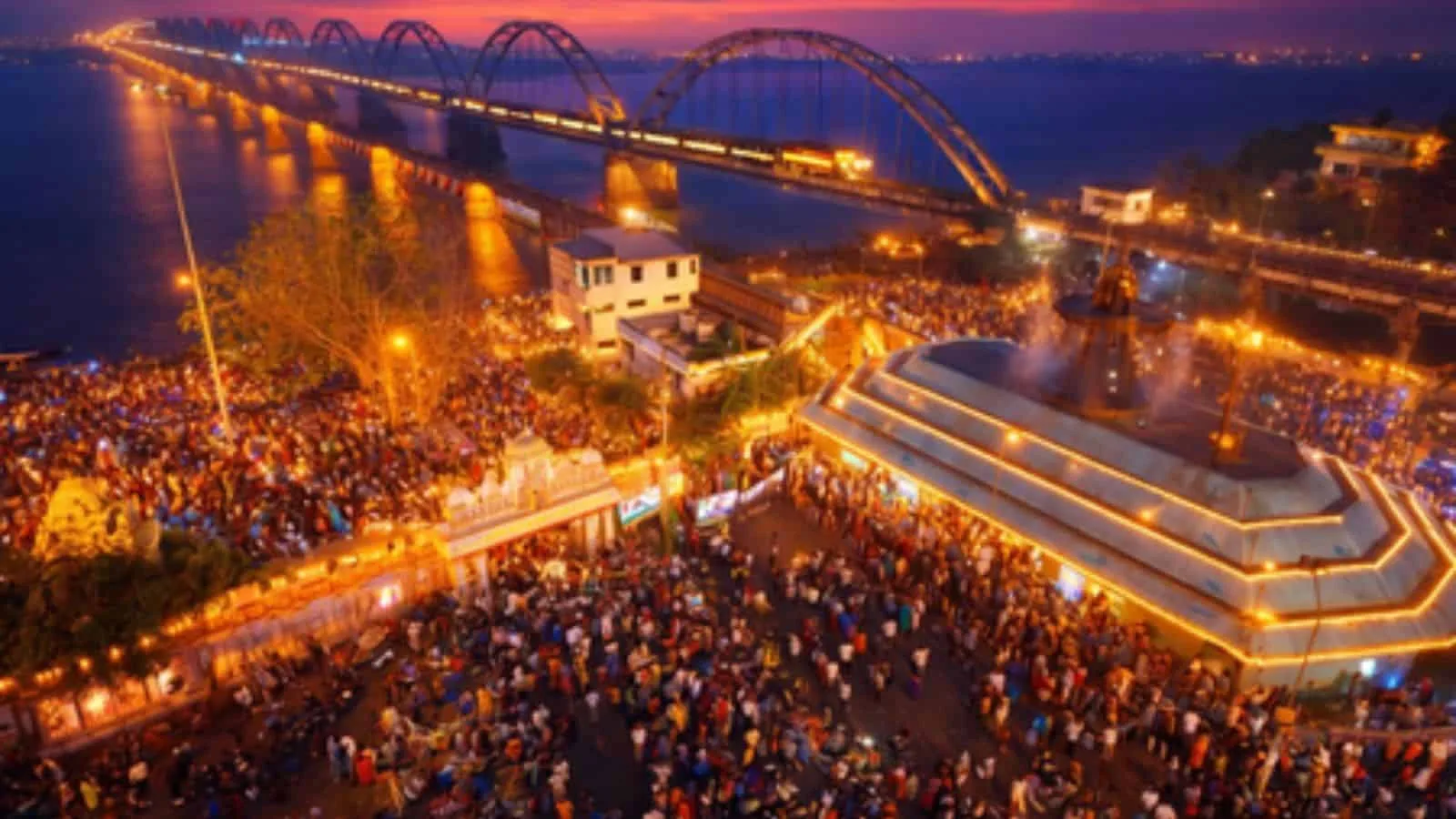
Hyderabad: The Telangana government has constituted a Cabinet Sub-Committee on the conduct of what is popularly called the ‘Southern Kumbh Mela’ the Godavari Pushkaralu.
According to a Government Order issued by Chief Secretary K Ramakrishna Rao, the Sub-Committee will examine and decide on the conduct of Pushkaralu 2027. The nine-member panel will be headed by Minister for Information Technology and Industries, D Sridhar Babu.
Ministers Komatireddy Venkat Reddy, Ponguleti Srinivasa Reddy, Ponnam Prabhakar, Konda Surekha, Danasari Anasuya Seethakka, Tummala Nageswara Rao, Adluri Laxman Kumar and government P Sudershan Reddy are the members of the Sub-Committee.
MPs, MLAs and MLCs, representing the areas abutting Godavari River will be called for the meeting as special invitees as and when required. Principal Secretary to the Government, Revenue (Endowments) Department will be the convener of the Sub-Committee.
It has been asked to submit the recommendations at the earliest. Chief Minister A Revanth Reddy has already directed officials to make advance preparations for the Godavari Pushkaralu, which begins on July 23, 2027.
The state government also decided to seek a special package from the Centre, considering the massive influx of pilgrims expected for this Southern Kumbh Mela. The Chief Minister directed officials that the arrangements should be made on a permanent basis with proper long-term planning.
He emphasised the development of major temples along the Godavari riverbank across the state, ensuring robust infrastructure to manage the massive flow of devotees during the Pushkaralu.
At a meeting with officials recently, he stressed that facilities for the lakhs of pilgrims who come for the holy dip should be arranged without any shortcomings. The Godavari River flows for about 560 km in Telangana, with around 74 ghats proposed for Pushkar arrangements. The CM instructed that priority be given to Basara, Kaleshwaram, Dharmapuri, and Bhadrachalam temples, where pilgrim inflow is expected to be highest.
He ordered that permanent Pushkar ghats be developed along with temple infrastructure. The second priority would be other riverside areas suitable for Pushkar baths.
He said facilities must be in place to handle crowds of over two lakh devotees in a single day, including roads, traffic management, parking, drinking water, bathing ghats, and accommodation.