
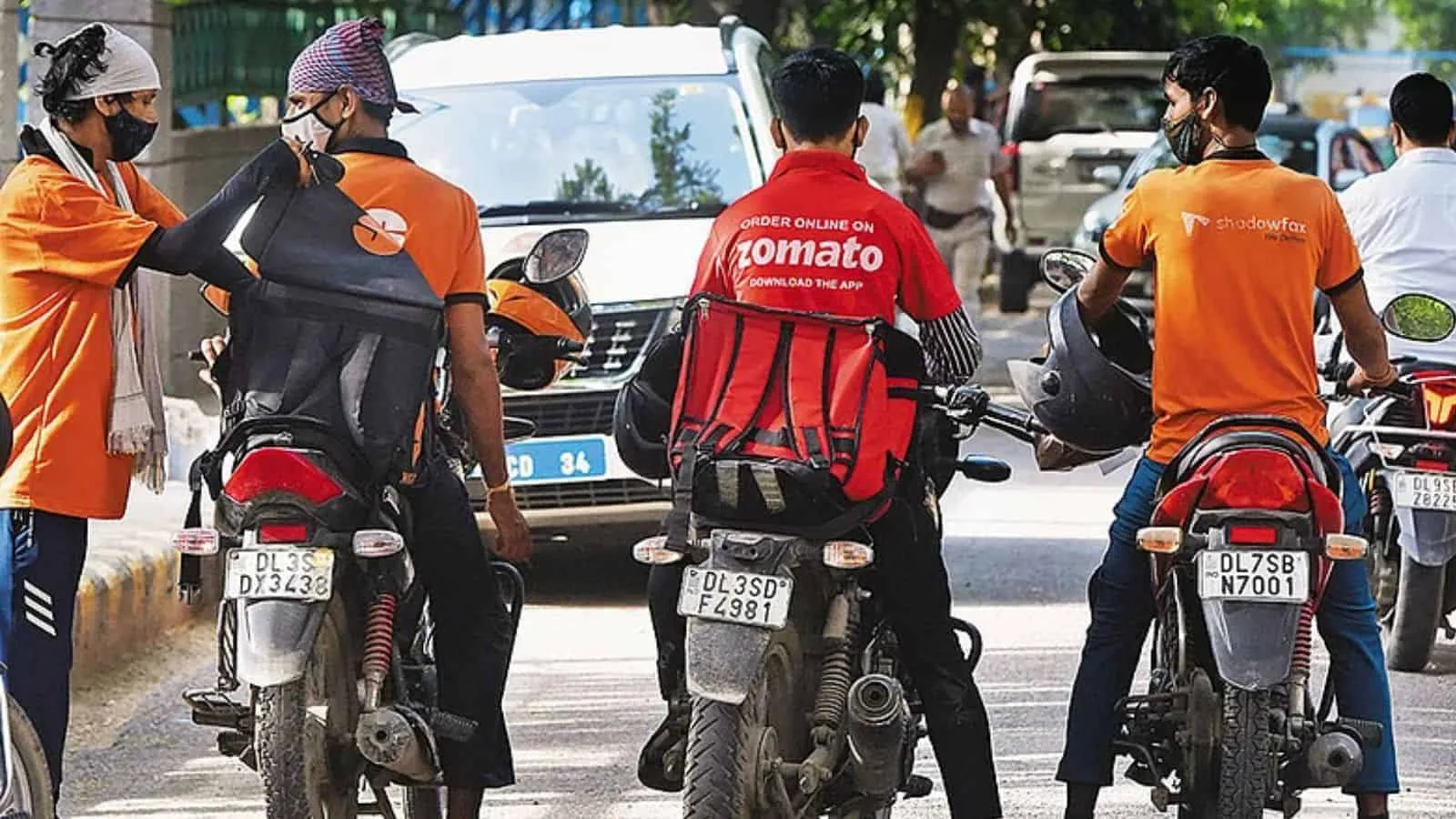
Hyderabad: The Telangana Gig and Platform Workers Union (TGPWU) on Tuesday, March 24, welcomed the state Cabinet’s decision to approve the Telangana Platform-Based Gig Workers (Registration, Social Security and Welfare) Bill, 2026, while suggesting a series of amendments to strengthen the legislation.
TGPWU founder president Shaik Salauddin, in a communication to Labour Minister Gaddam Vivek Venkatswamy, said the union wanted the Telangana law to serve as a model legislation for other states and submitted specific changes to several clauses of the Bill.
On the definition of “platform work” under Section 2(m), the union said the provision was redundant and added unnecessary confusion since “gig work” and “platform” were already clearly defined elsewhere in the Bill.
On the composition of the welfare board under Section 4(2), the TGPWU suggested that at least one woman representative be nominated in each category of membership, in line with a similar provision in the Karnataka ordinance on gig workers.
On meetings of the board, the union made two separate proposals. Under Section 6(1), it suggested that the board be mandated to meet at least once every quarter, in line with the Karnataka ordinance. Under Section 6(4), it proposed that the quorum for board meetings be fixed at one-third of total members.
On the powers and functions of the board under Section 7(i), the union suggested replacing the existing provision with a clause that empowers the board to “seek data of the platform-based gig workers who work with respective aggregators and platforms.”
On the rights of gig workers under Section 8(b), the TGPWU suggested that workers have access to social security schemes based on contributions made by them, as may be notified by the board.
On registration of gig workers under Section 10(2), it proposed that aggregators and platforms be required to share their database of all registered gig workers with the board within 45 days of the Act coming into force, mirroring the Karnataka ordinance.
The union also proposed clearer provisions on standard rates of remuneration under Sections 13(4) and 13(5), suggesting that where minimum wages are already prescribed under the Minimum Wages Act, 1948, the standard rates for gig workers shall not be lower than those minimum wages.”We want to ensure that the Telangana gig workers law serves as a model law for various jurisdictions,” Salauddin said.