Mainstream cinema is designed to be accessible and satisfying. Experimental cinema often resists that. It may feel confusing and slow. That discomfort is intentional – it pushes us toward more reflection.
We know that growth rarely happens within comfort zones and many techniques that are mainstream today originated in experimental cinema: nonlinear storytelling, unconventional editing and blurring genres. So, we know that today’s “strange” becomes tomorrow’s “standard.”
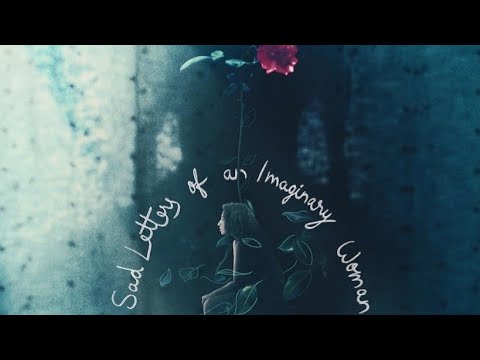
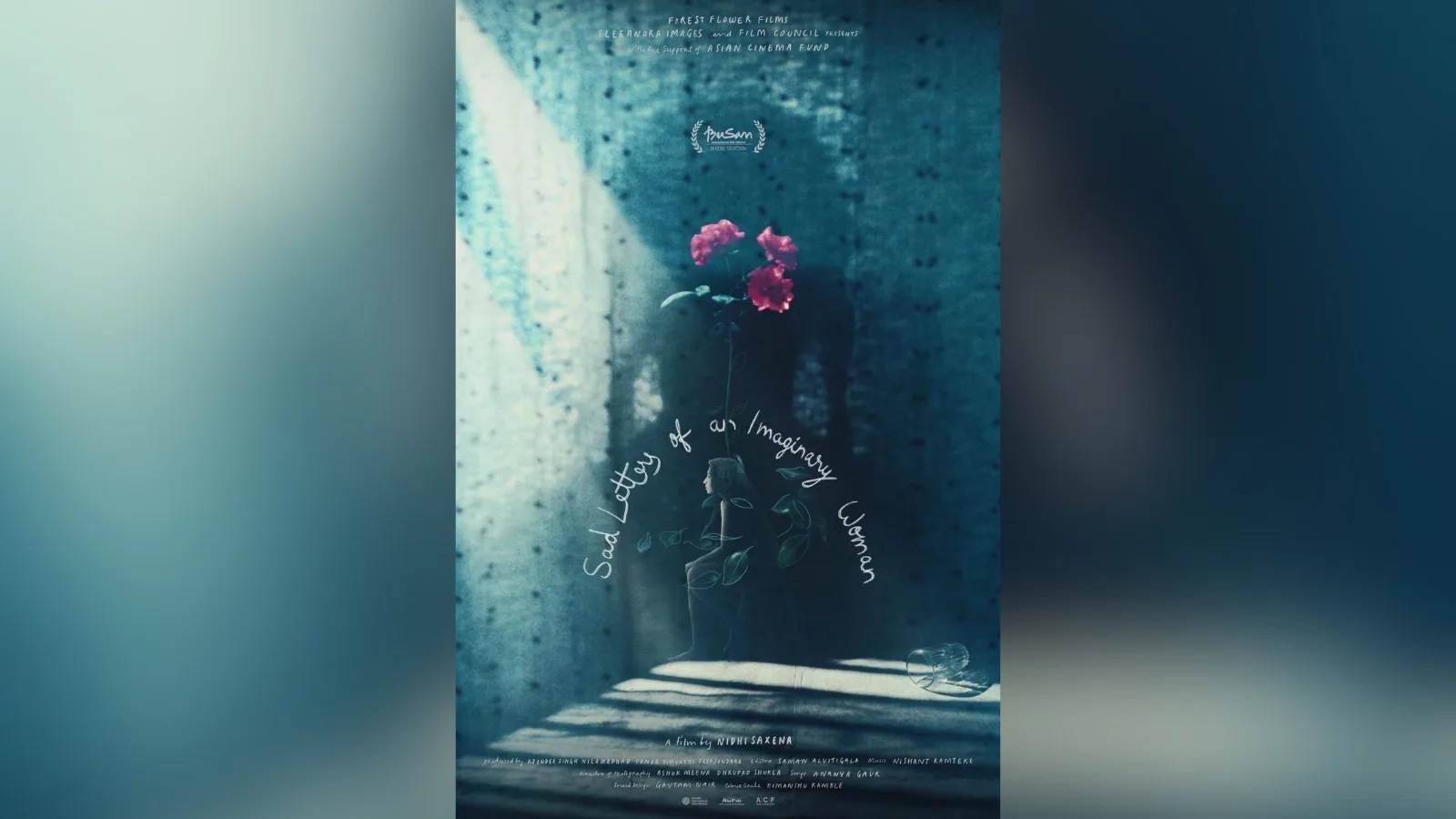
I found Nidhi Saxena’s film “Sad Letters of an Imaginary Woman” a rewarding watch, firstly and simply, for reminding me of this lovely song capturing a child’s longing for her parent to come home:
Saat samundar paar se
gudiyon ke bazaar se
acchi si gudiya laana
Gudiya chahe na laana
Papa jaldi ghar aana
(From across the oceans
from the market of dolls
bring a really nice doll
Don’t bring the doll if you wish
but Papa come home soon)
It gives us a glimpse of the story in which a man has left home and is yearned for by his daughter. Deeply tied to themes of longing and loneliness, the film is a presentation of women’s inner lives and the tumultuous landscape of desires.
Uncommonly creative shots are used to create a mythology of the everyday: Drops of water on an iron, curtains billowing, an apple slipping from a hand, all become imbued with power and meaning by the way the film makes poetry of words sound and images.
The words employed are resonant with mystery and ambiguity, and more impactful for how sparing they are – you can make a new key for a lock, but what can you do with a key that has no lock? Colour and light make the visuals utterly beautiful, even when set against an unsettling dark background. The colour palette is so deliberate, with lots of blue and some pink and white, mostly set against the darkness, it pulls you into the film with an intriguing beauty and softness.
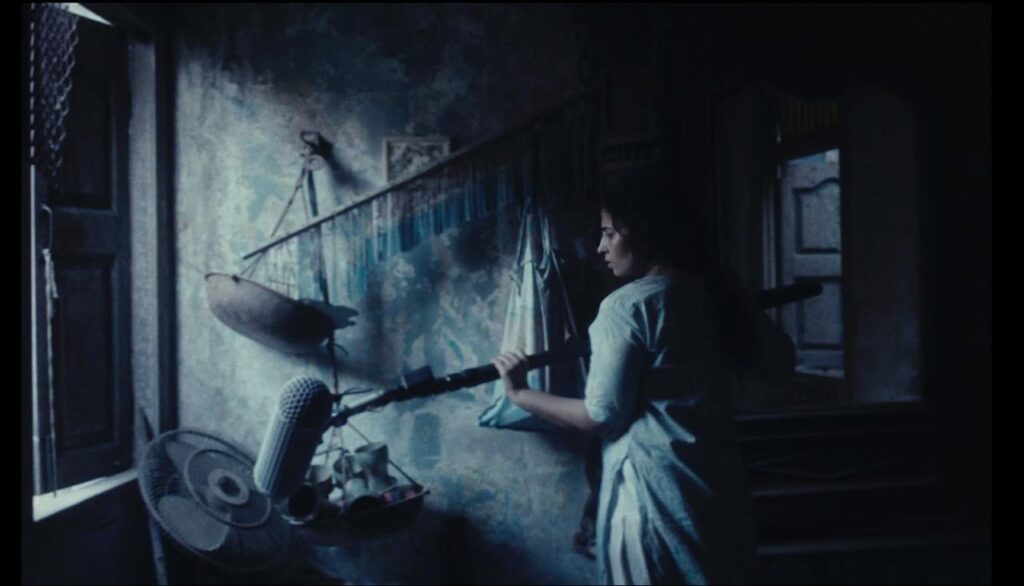
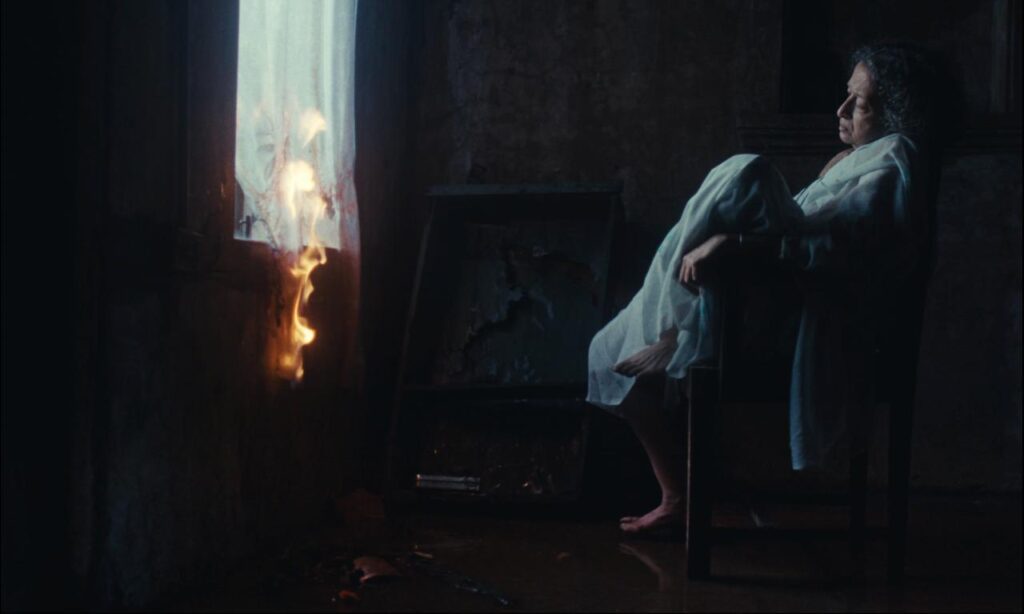
We see a woman with a big phallic boom mike trying to record memories around the house. These memories combine fantasy and dreamy manifestations of past, present and future in clear dislocations of time. Tropes of horror films are used to convey a sense of the paranormal, of cloudy inner life. The house is shot with this sensibility with shadowy, dark, grey and grainy images. It is like another character in the film, showing how places have such an intense hold on people. The house feels less like a location and more like a condition. It jails the women who inhabit it.
Set in traditions of magical realism, it channels Juan Rulfo, the forerunner of magical realism and Marquez. I asked Nidhi, the film-maker, how she had gone about visualising the film, and she gave interesting insights about how a filmmaker can communicate with her production team.
She said that she specially channelled Rulfo’s Pedro Paramour and gave underlined paragraphs from it to the sound designer to explain how the film should feel. “I collected a lot of images from paintings and gave them to my team to follow. I gathered the metaphors I wanted for each emotion and then tried to put them together with the words, visuals, music and soundtrack like a jigsaw puzzle,” she said.
The visuals these metaphors produced are emotional and moving. Speaking about a theme in the film around the erasure of the self, Nidhi said, “I knew I wanted something magical in the film – where people vanish, etc. I wanted to show the girl’s desire for suicide, but I wanted to show it through a magic trick, without pain.”
And the way it translated in the film is quite riveting. We see a woman sitting in front of a big mirror, her face lit by golden candlelight and very, very slowly she disappears.
The film’s unusual soundtrack functions as a second narrative register, turning the psychological world of the characters into tonal textures, showing inner lives dense with desire, memory, regret, fear, longing, wounds. The soundtrack gives reverberating shape to these states that the characters.
The elements are prominent on the soundtrack – rain, water and wind. The rain in this film soaks us in a strange intimacy with the women, a wet fluid world, very sensual. We are also never on solid ground as viewers, and the women in the film themselves are rarely on solid ground. There is a water choir on the soundtrack that guides and misguides, a downpour of remembering what was, what could have been.
There is a shot of the leaking roof of this crumbling haveli (house) and the water drops are shown collected in a bowl. It is a shot filled with feeling and its colour palette is beautiful. The man waters a potted plant with those saved drops. A flower blooms in that pot. The daughter wakes up and hears her mother talking. She listens behind the door and then opens it.
We see the balcony space with a laundry line, flower pots and a person standing – maybe the man? The mother is hanging clothes on the laundry line. The girl enters the space and as the clothes on the line billow in the wind, the mother and daughter are in shadow behind the clothes, speaking in a moving exchange:
Who are you talking to?
The plants – they like being talked with, and grow well.
Mujhse karo (do it with me)
kya (what)?
baat (talking)!
The image, words and the sounds in the scene all unite to convey meaning – the man as generative of blossoming and then the desire for the mother’s love, nurture, etc.
The film as a whole expands our senses as well as our sense of women and the politics of desire and gender. We feel the losses that the women are feeling, of what they could be, of their potential. We feel the emotional bill of silences. Why communication is the hinge on which relationships turn.
The repeated shot of a red apple (a symbol of desire from Adam and Eve, etc) in the hand of a silent woman sitting in a chair, and then slipping from her hand, leads us to some understanding of the state of the woman: her clutching onto desire, the memory of desire and, perhaps, the loss of it. The shots with the man – his violence, his angered absence – all make us begin to sense the emotional illiteracy that often passes for strength in patriarchal worldviews.
The film uses the convention of writing letters across time. An older woman writing to her younger self. I asked Nidhi what letter would she write to her younger self, making this film? Anything she would do differently?
She replied that she would tell her younger self, “Now that you have done this, Nidhi, maybe you should move on to films that are more accessible.”
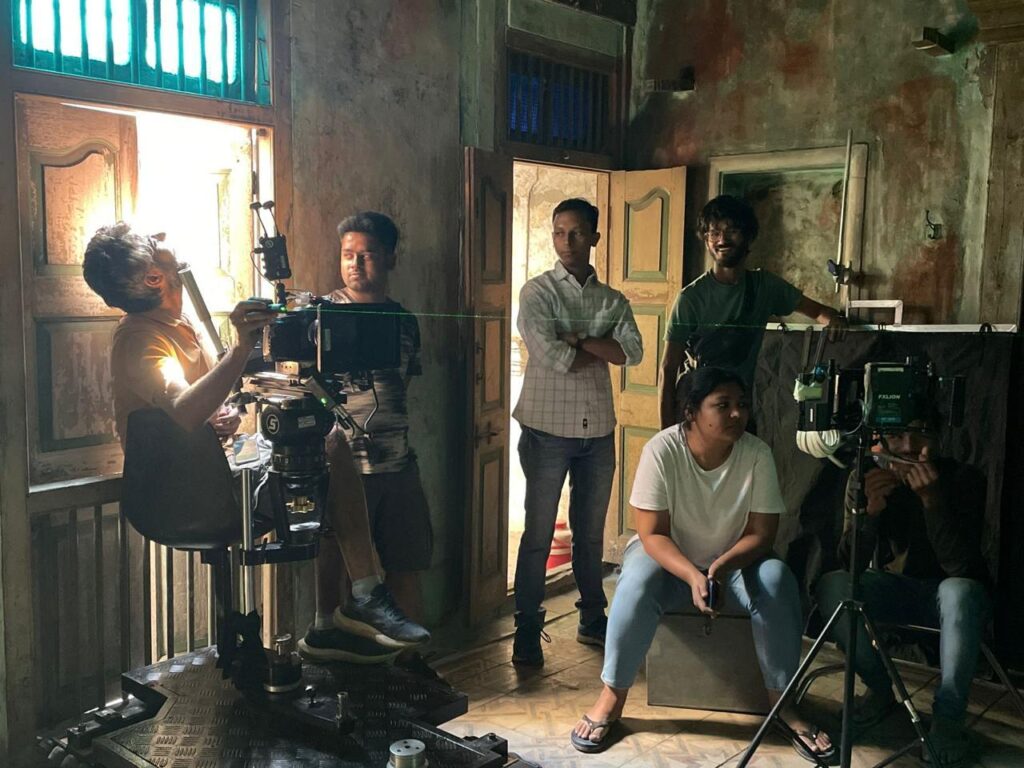
For me, this answer raised the issue of the popularity of films that can be understood and accessed easily and question the need to see less popular experimental films at all. I found it good to see this film and to remember that there are many types of cinema and all of them should be produced and made available to audiences.
Mainstream films follow familiar structures: clear plot, resolution and emotional cues telling the viewer what to feel. Experimental films disrupt this. They may be mysterious and symbolic. They force you to interpret, not just consume. You become an active participant, not a passive viewer – you begin to notice how something is said, not just what is said. This builds cognitive flexibility, a real-life skill, a skill needed in all problem-solving.
Nidhi Saxena’s film does not make itself smaller in ambition and clearer in meaning in order to be more accessible. This is to the credit of the filmmaker and her team. We fathom meanings out of what is presented and we feel connections at the substructure of our psyche. The film protects ambiguity. It is unusually honest about the way two women can both sustain and damage each other, without either being villainous.
There is no moral hierarchy between the two. The mother is not a monster, neither is Nidhi. They are caught in a circuit of mutual disappointment and love.
By sitting with silence, discomfort, or ambiguity, experimental films delve into varied internal states. Experiencing such states through films strengthens our understanding of nuance and our emotional intelligence, bypassing narrower binary understandings. The world and life have complexities that can be better negotiated if we have this kind of intelligence.
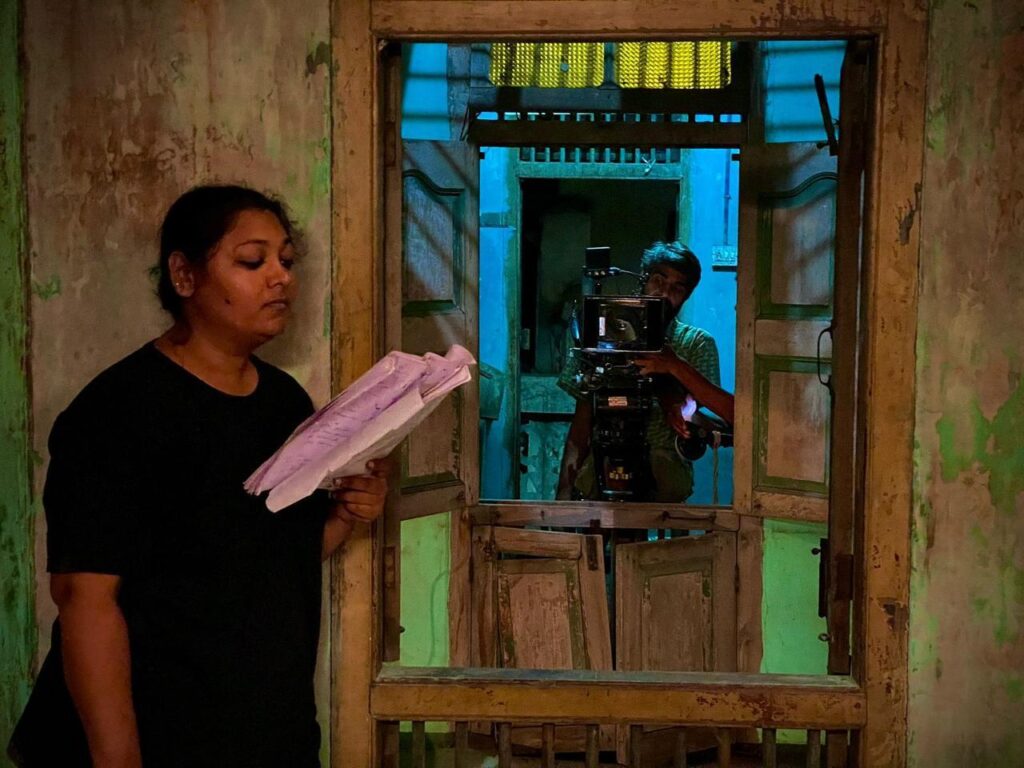
Mainstream cinema entertains and tells stories well, giving us pleasure and connection to our world. Experimental cinema stretches the boundaries of what stories can be, expanding our senses and understanding of our world. When done well, we can relish both, and as audiences, we are richer for it.