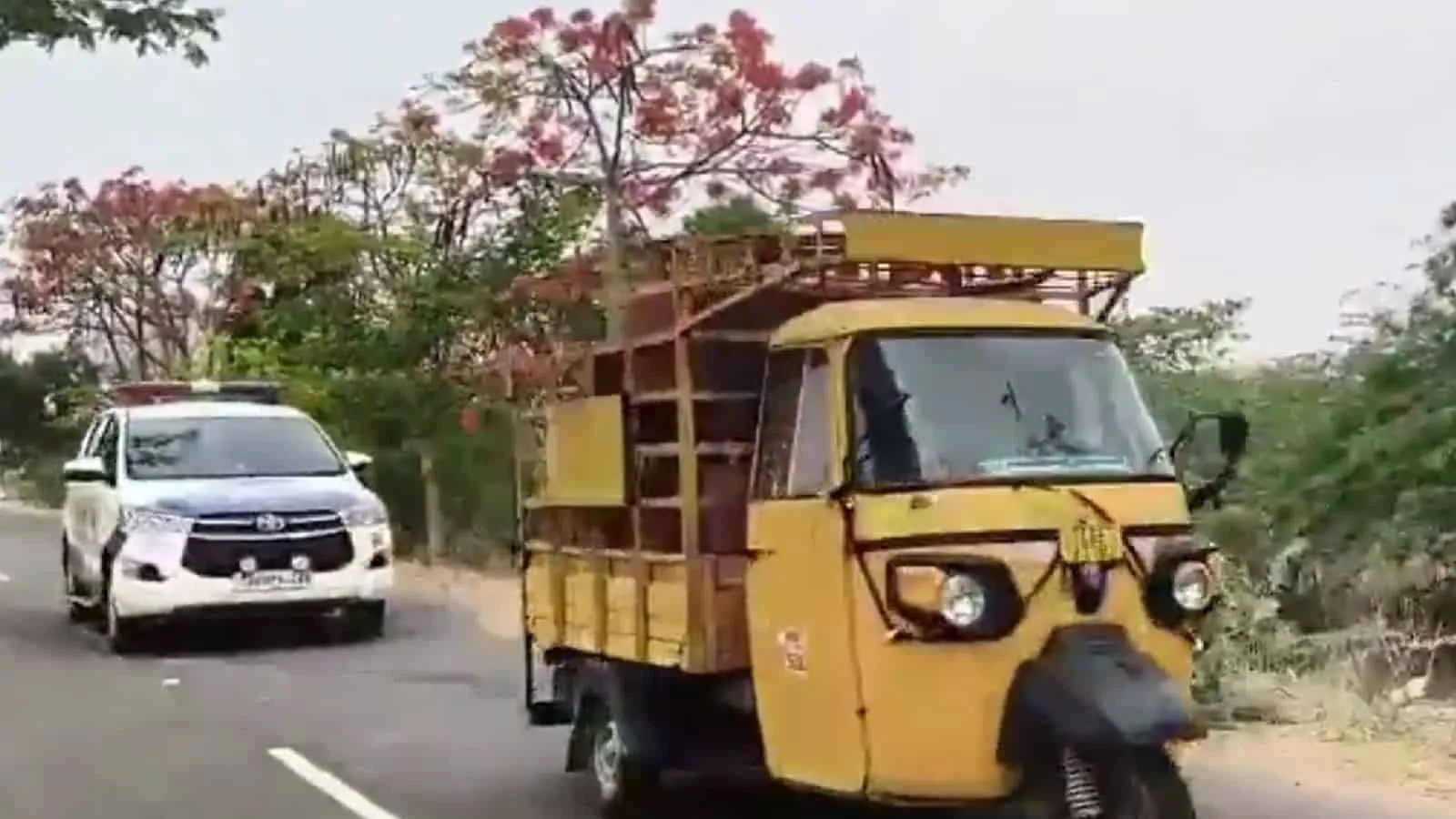
Hyderabad: A routine LPG distribution drive in Pedda Mupparam village of Mahabubabad district turned into an extraordinary spectacle this week when gas cylinders were delivered under full police escort, the kind of security arrangement typically reserved for VIPs and high-value convoys.
The auto-rickshaw carrying the cylinders moved through the village flanked by police jeeps, with two sub-inspectors overseeing the operation from start to finish. Officers remained on duty throughout the distribution, accompanying the vehicle street by street until every cylinder was handed over to residents.
The unusual arrangement was put in place over fears that the cylinders could be looted before reaching their intended recipients. Authorities and dealers say past incidents during periods of LPG shortage, in which residents or outsiders allegedly blocked delivery vehicles and forcibly took cylinders, prompted them to seek police assistance to ensure orderly and secure distribution.
The sight of gas cylinders rolling through the village under armed escort quickly drew reactions from residents, many of whom said they had never seen anything like it. The incident spread rapidly on social media and has since become a talking point across Telangana.
Public response has been mixed. Some have questioned whether it has come to a point where ordinary citizens can only receive basic cooking fuel with a police presence to guarantee it reaches them. Others have praised the police for stepping in to prevent disruption and ensure that legitimate customers were not left empty-handed.
LPG shortage
The incident comes amid a broader pattern of LPG availability stress in the Mahabubabad district. Earlier this month, residents of Vanthadupula village in Narsimhulapet mandal were reported to have slept outside a gas agency for days waiting to collect cylinders, with crowds protesting on the national highway over delays in supply.
For now, the image of police jeeps escorting cooking gas through a village has become a symbol of the pressure on LPG supply chains at the ground level, and a question mark over whether such measures should be extraordinary or are quietly becoming routine.